The global space race has decisively pivoted toward a singular objective: the radical reduction of orbital access costs. While SpaceX continues to set the industry benchmark, China is rapidly closing the technological divide by developing its own proprietary reusable launch systems. The successful recovery of the Zhuque-3's first stage marks a watershed moment for China's private aerospace sector. The focus has shifted from mere proof-of-concept demonstrations to the full-scale industrialization of reusable boosters.
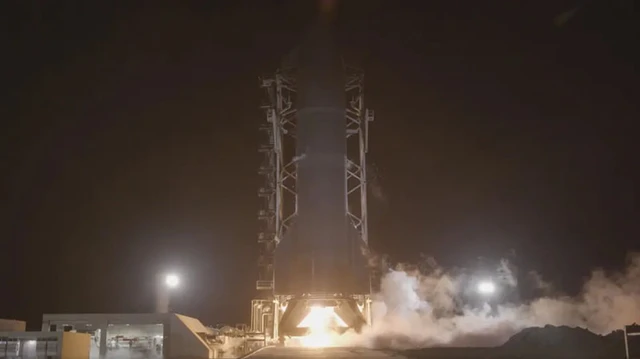
The events of August 19 signaled a pivotal shift in the trajectory of Chinese astronautics. The Zhuque-3 rocket lifted off from the Dongfeng commercial launch complex, located within the Jiuquan Satellite Launch Center. The mission followed a textbook sequence: the second stage successfully delivered its payload into the target orbit, while the first stage, having completed its primary objective, began the complex process of returning to Earth.
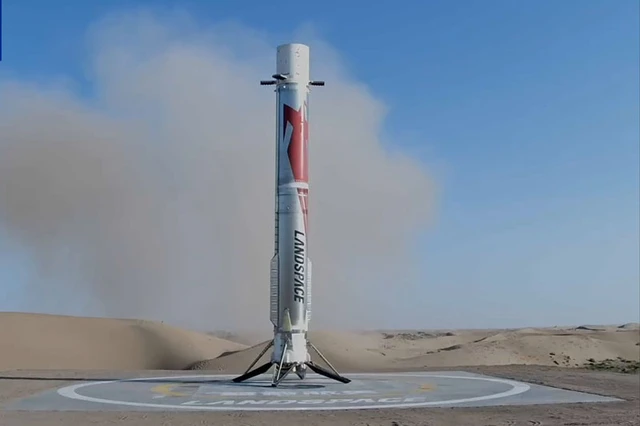
The technical triumph of the mission lay in the flawless execution of the controlled descent. Following stage separation, the booster performed a precise orientation maneuver in space and executed a vertical landing on a designated pad in Gansu Province, approximately 390 kilometers from the launch site. For China's private aerospace sector, this achievement is a landmark milestone: it marks the first time an orbital-class booster has touched down on land using its own integrated landing legs.
The Zhuque-3 is a two-stage launch vehicle standing approximately 66 meters tall. In terms of scale and conceptual design, it evokes immediate parallels to the Falcon 9, yet it possesses several critical technological distinctions. The rocket's airframe is constructed primarily from stainless steel, and it utilizes a liquid methane and liquid oxygen (methalox) propellant combination.
The pivot to methane-powered engines is a strategic move. Unlike the kerosene used in the Falcon 9, methane combustion produces virtually no soot or carbon deposits. This is critical for reusability, as the engines require significantly less maintenance between flights, allowing LandSpace to set an ambitious target: extending the operational lifespan of the first stage to 20 launches. The nine engines of the first stage provide not only the raw thrust required for liftoff but also the precision deceleration necessary for reentry into the dense layers of the atmosphere.
The road to success was far from linear. A previous launch in late 2025 ended in drama: despite successfully placing the payload into orbit, the returning booster was lost. A combustion anomaly during the final phase of the maneuver led to the stage exploding just as it reached the landing zone. However, it was precisely this failure that allowed engineers to refine the control algorithms and safety systems.
It is worth noting that China is exploring divergent philosophies regarding rocket recovery. Previously, the state-run CALT academy, as part of the Long March 10B project, successfully landed a stage on a sea platform, but utilized a "capture" method involving steel cables and nets. LandSpace’s approach, utilizing deployable landing legs, is more autonomous and technologically demanding, effectively mirroring the architecture that established SpaceX as the market leader.
The company now faces its ultimate hurdle: operational reusability. LandSpace plans to relaunch the recovered stage within the next six months. Should this experiment succeed, it will provide definitive proof that reusability is no longer the exclusive domain of a single entity, but is becoming a global engineering standard, paving the way for the mass-market, low-cost exploration of near-Earth space.
 The Phenomenon of the Supermassive Galaxy IC 1101