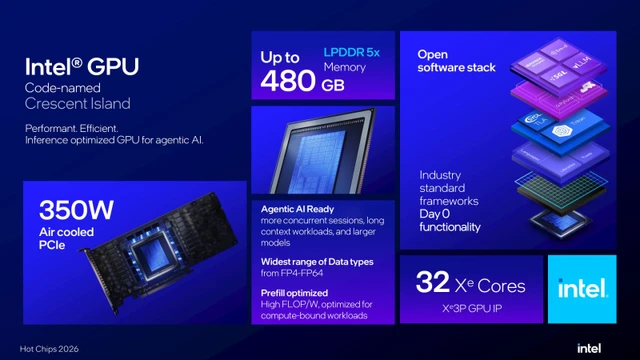
For years, the prevailing consensus was that true artificial intelligence could only be realized within the sprawling confines of colossal data centers. Yet, the meteoric rise of Small Language Models (SLMs) is challenging the fundamental necessity of these massive computing clusters. Localized computing on personal devices is no longer a mere compromise; it is evolving into a viable, full-scale alternative to the cloud behemoths. This tectonic shift threatens to rewrite the industry's economic playbook, potentially eroding billions of dollars in infrastructure investments.
For years, the artificial intelligence industry has adhered to a "brute force" paradigm: the assumption that intelligence scales linearly with model parameters and the volume of training data. This trajectory birthed behemoths like GPT-4, which require vast server farms—essentially entire cities of GPUs—to function. However, recent research from U.S. specialists suggests that this arms race may be overkill. Small Language Models (SLMs), capable of running locally on consumer PCs and Macs, are demonstrating an efficiency that, in most scenarios, rivals their heavyweight counterparts.
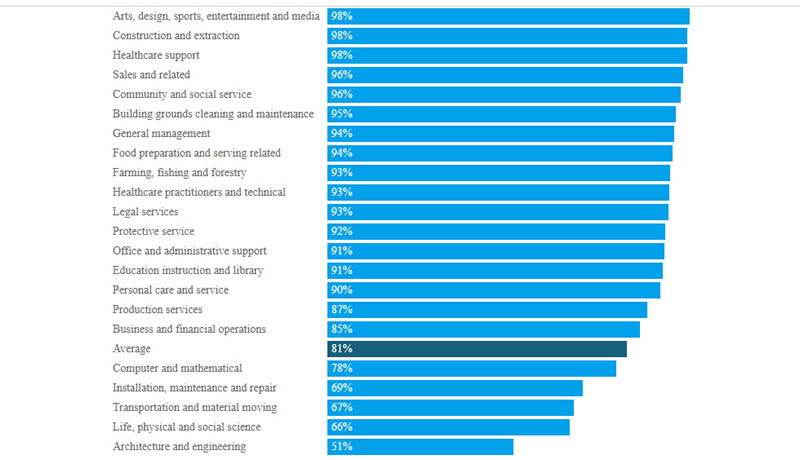
Extensive benchmarking—spanning half a million standard queries and an equal number of reasoning tasks—has revealed a surprising trend. In over 80% of cases, local SLMs match the output quality of cloud-based LLMs. In applied domains such as management, sales, and entertainment, the accuracy of smaller models has nearly hit a ceiling. The progress in complex computation is particularly striking: while SLMs succeeded in only 8% of such tasks two years ago, that figure has now surged to 50%.
This leap was made possible by a fundamental shift in training methodologies. Rather than simply scaling data volume, developers have pivoted toward knowledge distillation—a process where a larger model "teaches" a smaller one, transferring critical logical patterns. This has given rise to a new key performance indicator: "intelligence per watt." Over the last two years, energy efficiency has increased more than fivefold, meaning modern local systems consume 50–80% less power while maintaining high precision.
This technological pivot poses a direct existential threat to the business models of OpenAI, Anthropic, and Elon Musk’s xAI. The investment bubble surrounding these companies, whose combined valuation reaches into the trillions, was built on the premise that access to powerful AI would be gated behind paid subscriptions to cloud resources. If high-tier intelligence becomes free, open-source, and local, the value of proprietary APIs will plummet.
Furthermore, the hardware infrastructure is under pressure. A reduced reliance on monolithic data centers suggests that the relentless construction of new GPU, TPU, and Trainium clusters may slow significantly. This will inevitably force the tech giants to revise their capital expenditures (CapEx) and could cool the overheating semiconductor market.
In this new landscape, consumer hardware manufacturers emerge as the winners. Companies like Apple, which integrate Neural Engines directly into their silicon, hold a strategic advantage. Even Nvidia, the primary beneficiary of the "data center era," has begun to shift its vector by introducing a specialized AI platform for Windows. This move is more than a mere product line expansion; it is a strategic hedge. Should the world pivot from centralized cloud AI to distributed desktop AI, Nvidia intends to remain the monopolist in that segment as well.
We are witnessing a transition from the era of "digital leviathans" to the age of personal intelligence. AI is evolving from a remote service into a local tool—faster, more private, and more cost-effective—effectively erasing the line between server-grade power and the capabilities of a standard desktop.

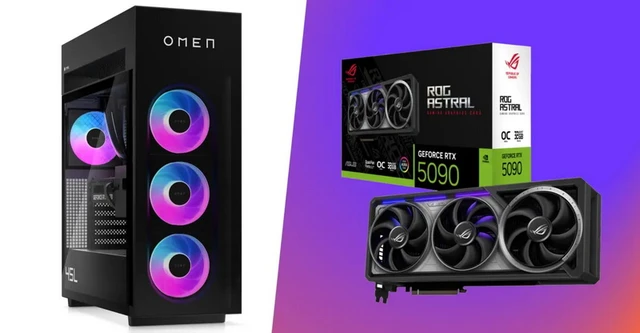 The Economic Paradox of the GeForce RTX 5090