The foldable device industry has long been locked in a struggle to balance structural integrity with aesthetic perfection. Polymeric materials, which have defined the standard in recent years, have inevitably succumbed to wear and tear and visible surface deformation. Samsung Display is now proposing a radical departure, pivoting from organic compounds toward noble metals. The integration of titanium promises to shift the very paradigm of flexible interface design, effectively eliminating the primary pain points plaguing today's foldable devices.
The "crease" in foldable smartphone displays has long since evolved beyond a mere cosmetic nuisance; it is now the primary engineering hurdle facing the entire industry. Traditionally, manufacturers have relied on multi-layered polymer structures which, despite their flexibility, possess inherent fatigue limits and a tendency toward gradual deformation. Samsung Display’s response to this challenge is "Flex Titanium"—a technological pivot that shifts the focus from plastic adaptability to structural rigidity.
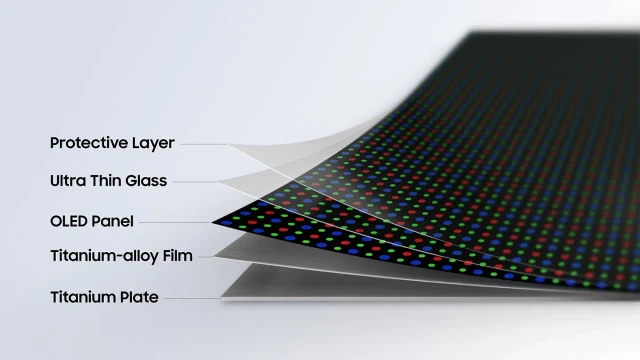
At the core of this new concept is the replacement of conventional polymer layers with titanium-infused components, complemented by a specialized titanium plate positioned directly beneath the display. From a materials science perspective, this approach achieves a critical objective: titanium's high strength-to-weight ratio allows for a significant reduction in overall chassis thickness without compromising resistance to mechanical stress. Consequently, the device becomes simultaneously slimmer and more durable, a benefit that becomes particularly evident over thousands of folding cycles.
This technological leap was no serendipitous epiphany; rather, it is the culmination of an iterative process spanning seven generations of foldable devices. Experience from previous iterations demonstrated that simply refining plastic quality was insufficient to achieve a perfectly flat surface—the physical substrate supporting the display required a fundamental change. By integrating titanium, the screen gains the necessary stability to render the visual artifact of the fold virtually imperceptible during standard use.
While the specific details of the Flex Titanium integration remain proprietary, it has been confirmed that this technology will serve as the cornerstone for the next generation of Galaxy foldable devices. The industry is now looking toward the Galaxy Unpacked event on July 22 for a full disclosure of technical specifications. This transition to a metallic foundation may well be the defining moment that finally elevates foldable smartphones from "experimental gadgets" to ergonomically flawless professional tools.
 Breakthrough in the Mass Production of Solid-State Batteries