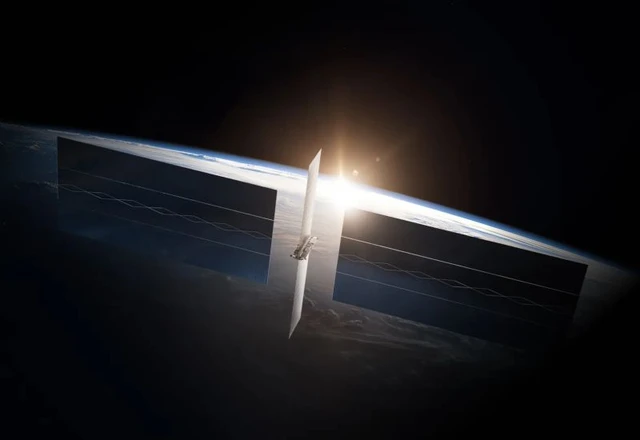
Modern astronautics is driven by a pursuit of peak launch efficiency, transforming payload delivery into a sophisticated piece of orbital choreography. The capacity to deploy multiple spacecraft into distinct trajectories has evolved into a critical requirement for national space agencies. The recent success of the Vega-C rocket at the Kourou spaceport underscores Europe's readiness to execute these complex, multi-payload missions. This launch bridged the gap between fundamental science and applied monitoring, pushing the boundaries of our understanding of Earth's ecosystems.
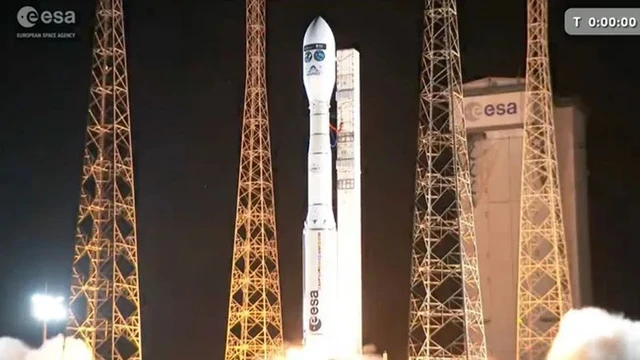
On September 15, 2026, the European space industry marked a significant technical milestone. A Vega-C launch vehicle successfully lifted off from the Kourou spaceport in French Guiana, deploying two strategically critical payloads into orbit: the FLEX (Fluorescence Explorer) scientific probe and the Copernicus Sentinel-3C satellite. Mission control, managed by the agency's ground center in Germany, confirmed that all separation operations proceeded nominally.
The mission's primary achievement was the demonstration of differential orbital deployment—the ability to deliver separate payloads to different orbits. This was made possible through the debut of the innovative Vespa adapter. The engineering solution relied on a specialized configuration: the more massive Sentinel-3C was positioned at the top of the stack, while the compact FLEX probe was integrated directly within the adapter's structure. This architecture allowed the Sentinel-3C to reach its target trajectory first, followed by the release of FLEX an hour later, ensuring each spacecraft achieved its own specific orbital parameters.
The technical specifications of the Vega-C are impressive in both power and precision. The vehicle is a 35-meter structure weighing approximately 210 tons, utilizing three solid-fuel stages to provide formidable initial thrust. The final phase of acceleration is handled by a fourth stage equipped with a liquid-fuel engine, responsible for the precision orbital insertion of the payload. The rocket is capable of delivering up to 2,300 kg to Low Earth Orbit (LEO). Since its debut in July 2022, the Vega-C has demonstrated high reliability, boasting a track record of six successful launches out of seven.
The scientific objectives of the FLEX probe merit particular attention. This spacecraft is the first instrument of its kind designed to study Earth's vegetation cover by analyzing fluorescence. At the heart of its operation is the FLORIS spectrometer, tuned to detect the ultra-faint emissions emitted by plant leaves during photosynthesis. This signal, invisible to the human eye, occurs during chlorophyll synthesis and serves as a direct indicator of a plant's metabolic activity.
By analyzing this data, scientists will be able to assess with unprecedented precision how efficiently flora converts solar energy and carbon dioxide into chemical energy. This will enable real-time monitoring of ecosystem health, capturing how plants react to drought, extreme heat, and other environmental stressors. In the long term, such data will become a cornerstone for ensuring global food security.
Parallel to the fundamental research conducted by FLEX, the Sentinel-3C satellite continues its operational continuity within the Copernicus program. Its instrument suite covers nearly every aspect of planetary monitoring: from measuring ocean surface temperature and analyzing sea color to tracking ice sheet altitude and sea ice thickness. The satellite also detects forest fires and monitors water levels in inland bodies of water.
Ultimately, a single mission addressed two fundamentally different objectives. On one hand, it has catalyzed deep research into photosynthesis; on the other, it has strengthened Europe's operational framework for environmental monitoring. The practical utility of the Copernicus program is undeniable: its data is used for high-precision weather modeling, translating complex space-borne data into clear, actionable answers regarding the state of our atmosphere.
 The Operational Lifespan of the Roman Observatory Has Doubled