The mobile processor market is frequently viewed as a relentless pursuit of raw performance; however, the true battlegrounds are defined by logistics and component availability. In the budget segment, platform stability and compatibility with current memory standards carry far more weight than a marginal bump in clock speeds. The recent launch of the MediaTek Helio G99+ serves as a textbook example of this pragmatic philosophy. By iterating on a time-tested architecture, MediaTek enables smartphone OEMs to adapt to evolving market dynamics without driving up device costs.
In the semiconductor landscape, not every silicon refresh is intended to trigger a revolution in performance or power efficiency. Often, the strategic objective is to sustain an established ecosystem, ensuring it remains viable amidst shifting market dynamics. This precise logic underpins the arrival of the Helio G99+—the successor to one of the most successful budget solutions of recent years.
The technical architecture remains largely untouched: the chip continues to leverage TSMC's power-efficient 6nm process. Under the hood, we find the familiar configuration of two high-performance Arm Cortex-A76 cores clocked at 2.2 GHz and six efficiency cores (Cortex-A55) running at 2.0 GHz. The graphics subsystem is powered by the proven Mali-G57 MC2 GPU, while data storage is handled via UFS 2.2 support. Even the imaging capabilities—supporting sensors up to 108 megapixels—and the integrated Cat-13 modem with dual-SIM VoLTE support remain unchanged.
The pivotal modification that elevates this from a mere remake to a relevant tool concerns memory management. While the base Helio G99 was limited to the LPDDR4X standard with bandwidth up to 4266 Mbps, the G99+ introduces support for LPDDR5X, raising the ceiling to 5500 Mbps. At first glance, this may seem like a marginal improvement, but on a global production scale, it is a critical factor.
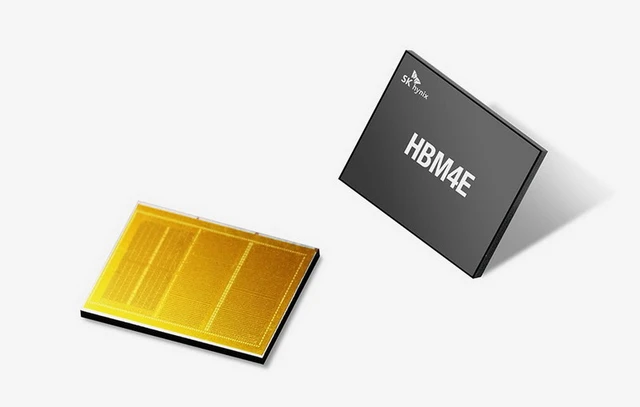
The modern DRAM market is undergoing a profound transformation: leading memory suppliers are aggressively transitioning their production lines toward HBM and DDR5/LPDDR5X. Consequently, legacy LPDDR4X components are beginning to face supply constraints, creating risks for manufacturers of entry-level devices. Integrating LPDDR5X support provides smartphone brands with essential agility, allowing them to utilize more modern and readily available memory modules without needing to overhaul the entire processor platform.
The strategic positioning of the Helio G99+ clearly signals a focus on markets where affordability takes precedence over 5G connectivity or flagship-tier raw power. This is a calculated move by MediaTek to extend the lifecycle of a successful platform. The company has previously introduced the Helio G100 and G200, both of which were based on the G99 architecture with minimal adjustments. Thus, we are witnessing the evolution of an industry "workhorse"—one that is adapting to external economic and technological pressures while remaining an accessible and reliable solution for the mass consumer.
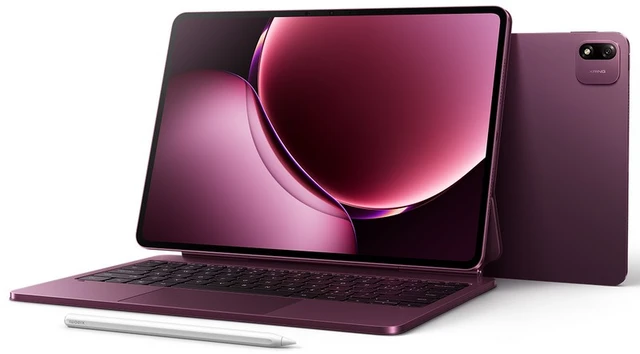 Power and Poise: The Xiaomi Pad 9 Pro Max