The high-tech rivalry between Washington and Beijing is escalating into a phase of total market purgation, aimed at eradicating the influence of Chinese corporations. At the epicenter of this clash is DJI, whose stranglehold on the drone market has evolved into a critical national security concern for the United States. The manufacturer's efforts to bypass trade sanctions via a web of shell companies have triggered a scorched-earth response from US regulators. The objective has shifted: it is no longer a simple matter of banning a brand, but a systemic campaign to dismantle every remaining legal conduit for DJI technology within the US.
The U.S. Federal Communications Commission (FCC) has launched a sweeping crackdown to identify and block a network of intermediary companies serving as fronts for DJI. This operation targets a complex web of entities, including Cogito Tech, Fixaxo Technology, Lyno Dynamics, Skyhigh Tech, Spatial Hover, SZ Knowact, and WaveGo Tech (which also operates under the Skyrover brand), as well as Xtra Technology. At this stage, the regulator has slapped these organizations with $25,000 fines for ignoring official inquiries, granting them an extremely tight window to provide explanations before more drastic sanctions are imposed.
The FCC's leverage stems from its stringent control over the radio frequency spectrum. Any device utilizing radio waves must undergo a formal authorization process to be legally imported, sold, or advertised within the United States. However, starting in late 2025, the landscape for Chinese manufacturers shifted critically: DJI and several other firms were added to the so-called "Covered List." This designation automatically disqualifies them from obtaining new authorizations on the grounds of national security.
Furthermore, the FCC has asserted its authority to revoke certifications retroactively. This means that any device—even those not classified as drones in the traditional sense—could be banned if it contains a transmitter or any other component manufactured by a blacklisted company. Consequently, even compact cameras and accessories are now in the crosshairs if they rely on DJI's underlying hardware architecture.
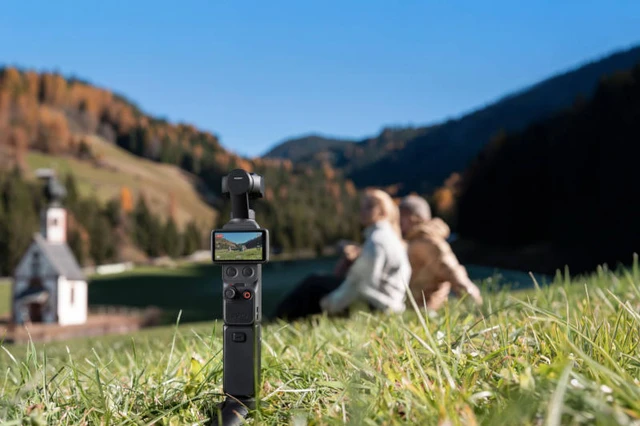
The regulator has paid particular attention to Xtra Technology, which attempted to employ a strategy of aggressive rebranding. In marketing campaigns featuring influencers, the Xtra Muse camera was openly compared to the DJI Osmo Pocket 3, while the new Xtra Muse 2 Pro appears to be a rebranded version of the DJI Pocket 4 Pro. The use of slogans such as "From Pocket to Pro" served as smoking-gun evidence for the FCC of an attempt to circumvent sanctions. Although some of these devices managed to secure authorizations before the stricter restrictions took effect, they have now virtually vanished from the regulator's official databases.
However, the campaign against DJI has evolved beyond simple trademark monitoring. The FCC has moved to dismantle the certification infrastructure itself, initiating audits of the testing laboratories that helped Chinese hardware pass inspection. Specifically, SGS-CTST Standards Technical Services Co and WaveGo Tech—both of which conducted tests for the Osmo Pocket 4 line—have come under intense scrutiny.
The decision to strip SGS of its accreditation was rooted in its ownership structure: it was revealed that 15% of the company is owned by the China Standard Science & Technology Group Company Limited, which is in turn fully controlled by the National Institute of Standardization of China. Within the framework of current U.S. Department of Commerce policy, where the PRC is officially designated as a "foreign adversary," any state involvement in the certification process renders a company an unacceptable partner. This sets a precedent where even third-party service organizations become casualties of the geopolitical rift, effectively closing the final legal loopholes for DJI in the American market.
 MSI Katana 15 HX and the Memory Paradox