The global AI arms race has shifted the industry's center of gravity from software to hardware. Today, proprietary specialized silicon has emerged as the primary competitive moat for tech giants. Against this backdrop, Apple and Broadcom have solidified their strategic alliance, extending their custom chip supply agreement through 2031. This move signals a pivot from basic wireless interfaces toward the development of sophisticated computing infrastructure tailored for neural networks.
In the world of high technology, there are companies whose names rarely grace the headlines of consumer media, yet whose influence on the industry is absolutely foundational. Broadcom is precisely such a "silent architect" of the semiconductor market. While public attention is captivated by consumer gadgets, Broadcom ensures their internal connectivity, crafting the components without which the modern digital ecosystem would simply cease to function.
The relationship between Apple and Broadcom has long evolved beyond a standard client-vendor interaction, transforming into a deep technological symbiosis. According to recent filings with U.S. regulatory bodies, the companies have extended their collaboration on the development of Application-Specific Integrated Circuits (ASICs) for several more years. This contract, spanning through 2031, covers multiple future device generations, underscoring the long-term nature of their shared technological roadmap.
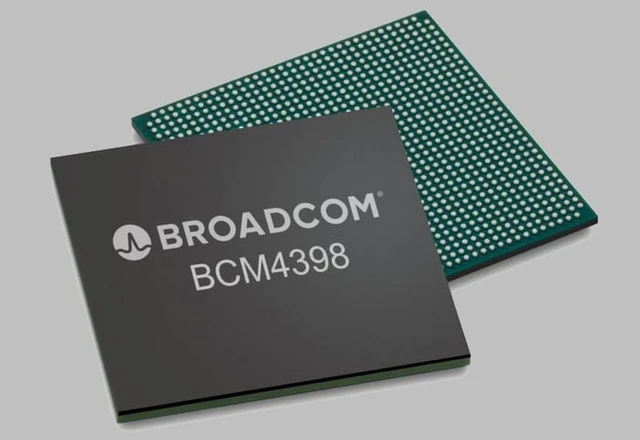
Historically, Broadcom served as Apple's primary source for wireless connectivity solutions. For decades, the company's chips powered the Wi-Fi, Bluetooth, and 5G modems in the iPhone. However, Apple's strategy has always leaned toward maximum vertical integration. Cupertino is gradually bringing the development of connectivity controllers in-house, creating proprietary solutions for the iPad and Mac. Nevertheless, the sheer complexity of modern modems is such that even Apple cannot entirely dispense with Broadcom's expertise, continuing to rely on their components to ensure the stability of its network modules.
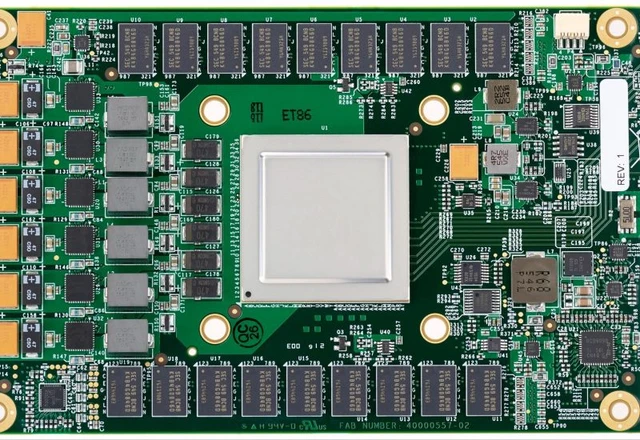
Today, the strategic focus of this partnership is shifting toward the most ambitious frontier of the decade: artificial intelligence. Broadcom has already established itself as the premier partner for giants like Google and Meta, assisting them in the creation of custom AI accelerators. This expertise is now being leveraged in Apple's interest.
This is not merely about chips for end-user devices, but about building a powerful infrastructural foundation. At the center of this effort is a project codenamed Baltra—specialized AI accelerators slated for release as early as next year. This computing power will be deployed across Apple's own data centers, powering the cloud services and neural network capabilities that will form the heart of the new Apple Intelligence ecosystem.
The economic magnitude of this partnership is staggering: analysts estimate that Apple generates up to 20% of Broadcom's total revenue. Such a high degree of interdependence makes any signal of contract renewal a potent catalyst for the stock market, as evidenced by the sharp surge in Broadcom's shares immediately following the announcement.
Thus, the alliance between Apple and Broadcom is evolving. The industry is moving from the supply of standard connectivity modules toward the joint design of highly complex data processing systems. For Apple, this is a means to accelerate the deployment of its own AI services without relying exclusively on third-party cloud providers; for Broadcom, it is an opportunity to cement its status as the primary hardware architect for the era of generative intelligence.
 Anthropic’s Strategic Push for Hardware Independence