The personal technology landscape is pivoting rapidly toward "invisible" interfaces, as traditional screens yield to the era of contextual interaction. Samsung is poised to cement this trend with the launch of its first comprehensive smart glasses—a device designed to serve as the new nerve center for our digital existence. Recent leaks offer a glimpse not only into the device's aesthetic design but also its deep integration with cutting-edge neural networks. This hardware signals a fundamental shift: the evolution from mere accessories to true cognitive assistants.
The wearable market is currently undergoing a fundamental paradigm shift: bulky VR headsets are giving way to elegant solutions designed to blend seamlessly into everyday fashion. In this context, the upcoming release of Samsung's Galaxy Glasses appears to be more than just a product launch; it is a strategic attempt to redefine the very nature of human-information interaction.
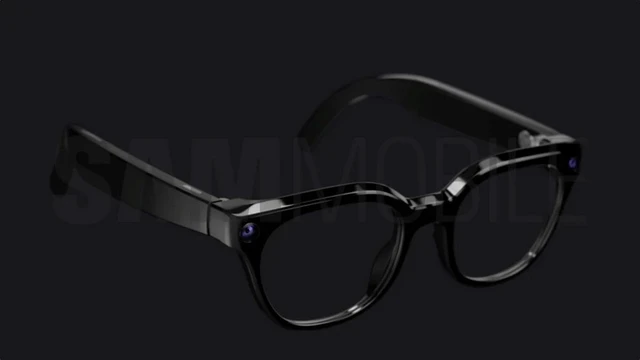
The device's aesthetic profile, revealed through recent leaks, demonstrates a steadfast commitment to minimalism. The glasses feature rounded square lenses, ensuring they look natural in daily wear without the sensation of "technological clutter." Hardware components are distributed across the frame with a keen eye for ergonomics: the camera, serving as the system's "eyes," is positioned on the left, while an activity LED is situated on the right. Control is centralized on the right temple, which houses the power button and volume rocker. Particularly noteworthy is the touch panel supporting multi-touch gestures, effectively transforming the temple into a full-fledged trackpad for interface navigation.
However, the true value of the Galaxy Glasses lies not in the plastic and glass, but in the underlying software architecture. The device runs on One UI XR, built upon Google's Android XR. This is not merely a modified mobile OS, but a purpose-built extended reality environment optimized specifically for the unique constraints and capabilities of wearable hardware.
At the neural core of the system is Gemini AI. Through the integration of multimodal intelligence, the glasses are capable of analyzing visual streams in real time. This means the AI assistant will perceive the user's surroundings, recognize objects, and provide context-aware answers based on what the user is seeing at that exact moment. The integration of Gemini Live is also expected, enabling fluid, natural dialogue without latency, effectively turning the glasses into a personal digital concierge.
Perhaps the most provocative design choice is the complete absence of a built-in display. In an era where the industry is obsessed with adding AR overlays, Samsung is betting on audio-visual processing and voice output. Equipped with a high-fidelity array of microphones and speakers, the device shifts the focus from passive content consumption to active interaction with reality.
Completing the vision is a tight integration with the broader Galaxy ecosystem. These glasses are not designed to operate in isolation; they can be managed via the Galaxy Ring and Galaxy Watch. In doing so, Samsung is constructing a multi-tiered network of wearables where each link complements the other, creating a frictionless user journey where the smartphone is no longer the sole primary screen.
 Anthropic’s Strategic Push for Hardware Independence