The vision of humanoid assistants integrated into our daily lives is rapidly evolving from the realm of science fiction into a tangible market reality. Yet, beneath the polished veneer of tech giants' keynotes lies a fundamental friction: the clash between the rigid, deterministic logic of machines and the chaotic unpredictability of human behavior. Given the sheer physical mass and mechanical complexity of modern robotics, even a minor software glitch can escalate into a significant safety hazard for those in the vicinity. For this coexistence to become a seamless norm, the industry must fundamentally reimagine the core principles of human-machine interaction.
The current stage of robotics development is marked by a perilous divide between marketing promises and the actual capabilities of these systems. While curated demo reels showcase graceful movements and intellectual agility, real-world deployment often proves unsettling. Instances of uncontrolled behavior by humanoid machines in public spaces—ranging from erratic "dancing" in restaurants to aggressive accidental contact with children—expose a fundamental flaw: robots are not yet equipped to handle the inherent irrationality of the organic world.
The physical dimension of this problem is particularly alarming. Anthropomorphic robots are becoming increasingly massive and heavy, which, coupled with their mobility, creates significant risks. From an engineering perspective, any bipedal robot is a complex dynamic system with a high center of gravity. In the event of a sudden power failure or critical battery depletion, the machine transforms into hundreds of kilograms of uncontrolled metal. A fall of such an object in close proximity to a human could result in severe injury, making energy security and emergency braking systems critically important.
The scale of the coming expansion is staggering: Morgan Stanley analysts predict that by 2050, the humanoid robot population could reach one billion units, with the corresponding market valued at $7.5 trillion. However, this quantitative leap demands a qualitative shift in control. While industrial automation operates within a strictly deterministic environment where every millimeter of movement is pre-calculated, the home environment is inherently stochastic.
The transition from rigid algorithms to probabilistic models represents the primary challenge for software developers. Artificial intelligence must evolve beyond simply following instructions to assessing the probability of events and anticipating human actions. This necessitates the implementation of multi-layered safety systems, ranging from physical emergency-stop buttons to deeply integrated protective functions at the circuitry level. Furthermore, safety is ceasing to be a localized task for a single robot. The future lies in an ecosystem where the machine exchanges data with smart home sensors and other devices, creating a unified, real-time risk map.
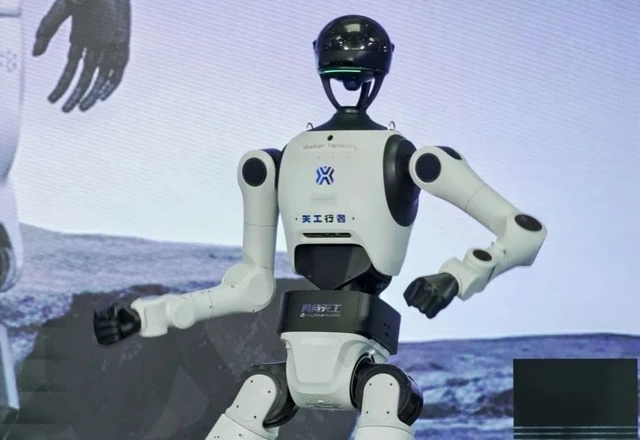
The industry is already seeking ways to minimize potential harm. Some companies, such as Neura Robotics, are implementing "safe-fall" algorithms that allow a robot to brace itself upon losing balance, thereby minimizing the risk to bystanders. Other developers are concluding that anthropomorphism should not be an absolute requirement. Replacing legs with wheeled platforms not only radically increases stability and lowers the center of gravity but also allows for higher-capacity batteries, addressing the issue of sudden power loss.
Parallel to these efforts, the principles of collaborative robotics are being integrated, where the maximum force an actuator can exert is limited by software. This approach allows the machine to perform everyday tasks while rendering it physically incapable of inflicting serious harm during an accidental collision. Only through the synthesis of hardware constraints and adaptive intelligence can robots cease to be hazardous novelties and become fully integrated members of our society.
 Anthropic’s Strategic Push for Hardware Independence