The AM4 socket has emerged as a definitive symbol of unprecedented longevity within the PC industry. Even as the market pivots aggressively toward the DDR5 standard and the AM5 platform, AMD continues to find ingenious ways to monetize its legacy silicon reserves. The understated launch of the Ryzen 7 4700LE is more than a mere catalog refresh; it is a calculated strategic maneuver designed to penetrate the budget OEM segment. This chip serves as a prime example of how legacy technology can maintain its relevance, driven by the cost-effectiveness of its supporting ecosystem.
The history of consumer hardware rarely sees a feat of longevity quite like the AM4 platform. Nearly a decade after its debut, it continues to generate profit—a fact underscored by the recent, quasi-stealthy appearance of the new Ryzen 7 4700LE in AMD's specifications. Based on the Renoir (Zen 2) family, this chip was never intended for the general consumer market in the traditional sense; its emergence online was largely accidental, triggered when users spotted it in pre-built systems from OEM integrators.
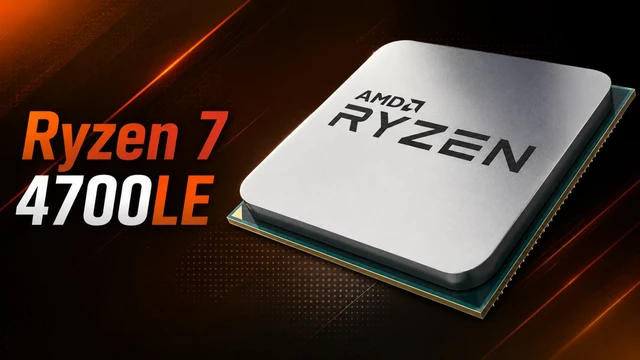
Technically, the Ryzen 7 4700LE is an intriguing hybrid. If viewed as a streamlined version of the Ryzen 7 4700G, the primary distinction is the complete absence of the integrated Radeon Vega 8 graphics core. The "LE" suffix likely stands for "Lite Edition," highlighting the product's narrow specialization for enterprise or budget-tier builds where a discrete graphics card is already a requirement.
Under the hood lies a full-fledged eight-core, 16-thread die manufactured on a 7nm process node. The base clock is locked at 3.6 GHz, with a boost clock reaching up to 4.2 GHz. However, this is where the primary trade-off occurs: the combined L2 and L3 cache totals only 12 MB. This modest L3 cache (8 MB) is a direct legacy of the chip's mobile lineage, which significantly bottlenecks performance in modern gaming and heavy computational workloads compared to full-fledged desktop solutions. Nevertheless, its 65W TDP makes this processor an ideal candidate for compact, small-form-factor (SFF) systems with minimal cooling.

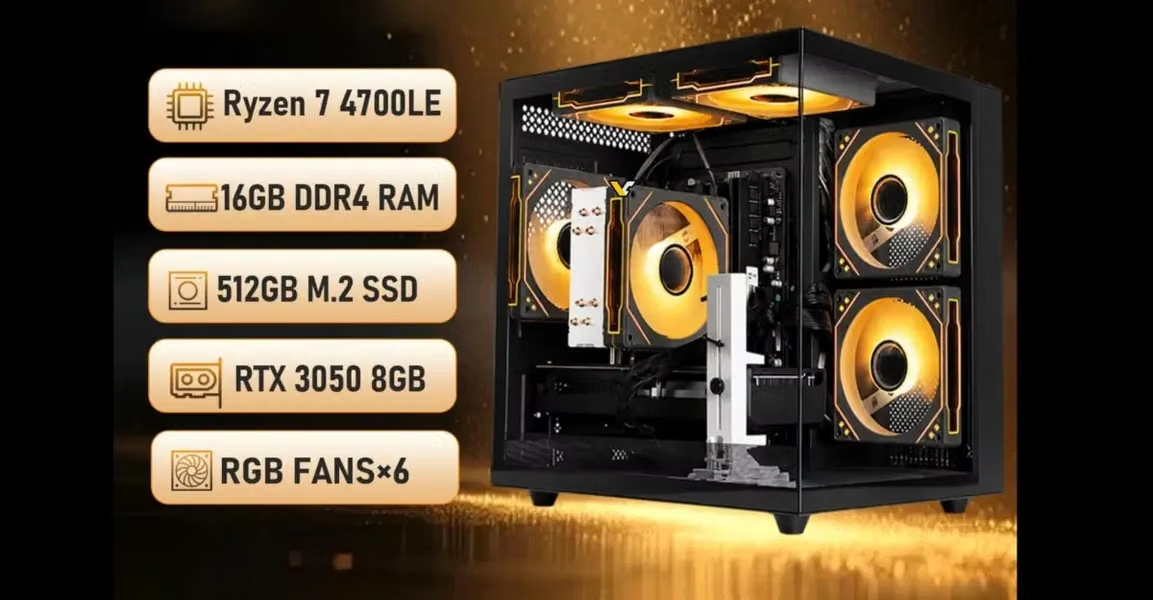
This strategy has already materialized in the market via systems from the Chinese integrator Qehi. A build appeared on Amazon featuring a modern panoramic "aquarium-style" chassis, where the Ryzen 7 4700LE is paired with an 8 GB NVIDIA GeForce RTX 3050, 16 GB of DDR4 RAM, and a fast 512 GB NVMe drive.
The price tag of $799.99 has sparked a polarized reaction within the tech community. From a pragmatic user's perspective, such a bundle is questionable. For a similar budget today, one could assemble a machine based on a Ryzen 5 5600 or 5500, which, when paired with a more current Radeon RX 7600, would deliver a massive performance leap. Consequently, the 4700LE in this configuration looks less like a new product and more like an attempt to clear out legacy inventory.
However, viewed through AMD's lens, the logic is crystal clear. First, this is a classic case of silicon utilization: the company is offloading surplus Zen 2 dies that would otherwise be written off. Second, the economics of the AM4 platform remain extremely attractive for the mass OEM market. Motherboards for this socket and DDR4 memory are significantly cheaper than their modern AM5 counterparts. In an era of global component price volatility, the ability to offer affordable, entry-level hardware becomes a vital competitive advantage.
This tactic of "resurrecting" legacy hits is becoming systemic. The recent release of the anniversary Ryzen 7 5800X3D confirms that AMD intends to support AM4 for as long as it remains commercially viable. It appears that the era of the longest-lived socket in PC history is far from over.
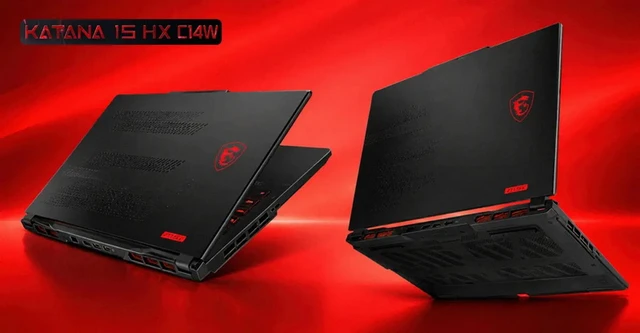 MSI Katana 15 HX and the Memory Paradox