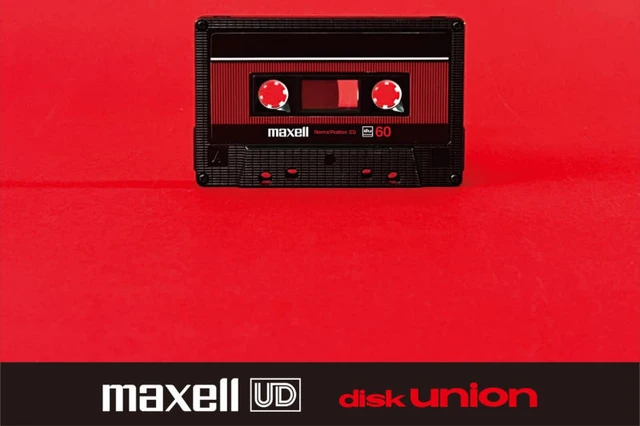
Technological progress is often cyclical, frequently leading us back to our origins. In an era dominated by streaming and cloud storage, the tangible essence of analog media is reclaiming its value. The collaboration between Maxell and Disk Union signals a strategic homecoming to the golden era of magnetic tape. This is more than just a commercial product; it is a cultural artifact for those who remember the tactile nature of music and data.
The contemporary electronics market is witnessing a resurgence of the aesthetics and functionality of the past. The newly announced special release of UD-60U classic audio cassettes, a collaborative effort between Maxell and Disk Union, targets an audience for whom magnetic tape is not merely a vestige of a bygone era, but a potent symbol of a specific cultural epoch.
At the core of these new cassettes is Type I technology, utilizing ferric oxide. From a technical standpoint, these media have always occupied the mass-market segment. While they lacked the playback quality and dynamic range of the more expensive Type II chrome tapes or the Type IV "metal" tapes—which were engineered for high-fidelity recording—it was Type I that served as the bedrock for an entire generation of users.
For many retrocomputing aficionados, Type I cassettes are associated not with music, but with the first tentative steps into programming. Throughout the 1970s and 1980s, they served as the primary external storage medium for home 8-bit systems. These tapes held the programs and data for legendary machines, ranging from the Commodore VIC-20 and Plus/4 to the ZX Spectrum, Amstrad CPC, MSX, and BBC Micro. The process of loading data from a tape, accompanied by that characteristic digital screech, became an indelible part of the user experience of that era.
The history of the Maxell UD series dates back to 1970. From its debut, the line was positioned as a mass-market product with reduced noise levels. Over time, Maxell engineers implemented a cleaner magnetic layer based on gamma-hematite, which significantly enhanced recording characteristics. During its zenith, the UD series was a staple for major record labels, competing head-to-head with giants such as the TDK SD and Sony HF.
The brand's revival began in 2016, when Maxell reintroduced cassettes featuring authentic vintage packaging. The initial batches, released in partnership with Disk Union last year, sparked a surprising surge in demand among collectors and analog sound purists.
The latest release continues this trend, offering consumers the opportunity for tangible ownership of content. A single unit is priced at 990 yen (approximately $6.25), while a three-pack is available for 2,900 yen (around $18.28). This product underscores the growing "slow tech" movement, where the act of recording and listening becomes a mindful ritual, standing in stark contrast to the ephemerality of digital consumption.
 The Economic Paradox of the GeForce RTX 5090