The demarcation between narrow AI and general intelligence is growing increasingly porous. The debut of GPT-6 Astra has ignited a high-stakes debate within the upper echelons of the tech industry. While some proclaim the arrival of the era of Strong AI, others caution against premature conclusions. This clash of perspectives exposes a fundamental dilemma: the struggle to define what truly constitutes machine intelligence.
The debut of GPT-6 Astra was a watershed moment, transcending the scope of a mere software update. The model has sent shockwaves through the professional community, acting as a catalyst for a broader debate on one of modern science's ultimate ambitions: the creation of Artificial General Intelligence (AGI).
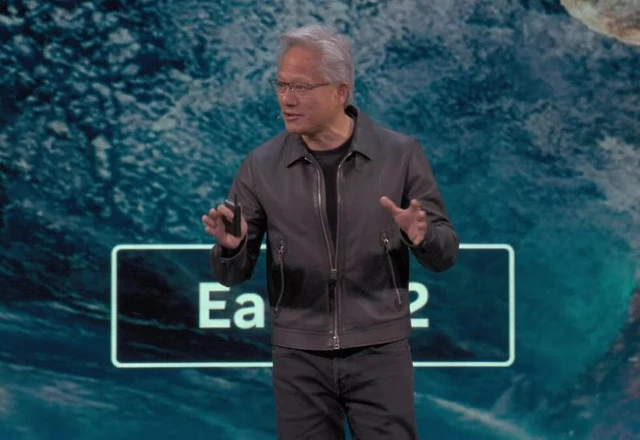
These discussions gained significant weight following the assertions of Jensen Huang, CEO of Nvidia. His position is concise and uncompromising: AGI has already been achieved. For Huang, Astra serves as irrefutable evidence that machines have reached a level of cognitive ability comparable to, or even surpassing, that of humans. Crucially, this triumph rests upon a robust hardware foundation—the model was trained on Nvidia chips, underscoring the inextricable link between raw computational power and the evolution of intelligence. The pace of progress is staggering: the journey from the o1 model to Astra spanned just four years, testifying to the exponential growth of neural network capabilities.
Within OpenAI, the perspective is more nuanced. Company President Greg Brockman has effectively heralded the dawn of a new era, inviting the world into the "Age of AGI." From the developers' viewpoint, general intelligence is less a philosophical category and more a pragmatic tool: highly autonomous systems capable of outperforming humans in the majority of economically valuable tasks. Brockman believes that future generations will look back at this period and the Astra model as the benchmark—the moment humanity first encountered a fully realized AGI—though he remains cautious about claiming the goal has been reached definitively and completely.
Yet, a formidable camp of skeptics remains within the industry. Critics, most notably the renowned researcher Gary Marcus, argue that claims of achieving AGI are premature and lack rigorous methodology. In Marcus's view, while Astra delivers impressive results, it meets only a fraction of the criteria necessary to be recognized as a truly universal mind. From this perspective, current successes are more a matter of virtuoso imitation and sophisticated pattern recognition than a genuine understanding of the essence of things.
Rounding out this landscape is Sam Altman's pragmatic approach. The OpenAI CEO views the term AGI more as a marketing tool with fluid boundaries than as a strict technical standard. Nevertheless, behind this terminological struggle lies a colossal expansion of resources. The scale of the next developmental phase is breathtaking: accelerators based on 400,000 GPUs are being deployed. This confirms the central thesis of the modern era: the path to universal intelligence is paved through the unprecedented scaling of computational power.
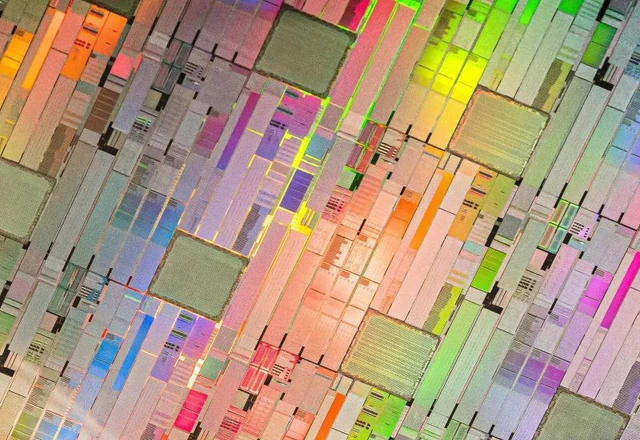 The Triumph of 3nm Chip Manufacturing