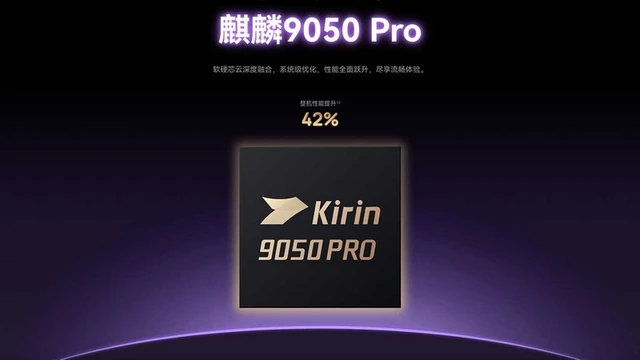
The contemporary mobile computing landscape is evolving beyond the mere "gigahertz race," ushering in an era defined by the deep integration of neural networks and sophisticated graphical processing. Within this paradigm, the introduction of next-generation Systems-on-a-Chip (SoCs) has become the primary driver of brand competitiveness on the global stage. The debut of the Kirin 9050 Pro marks a pivotal shift in hardware evolution, pivoting the focus toward on-device intelligence and photorealistic rendering. This silicon is engineered to serve as the bedrock for the next generation of flagship devices, including cutting-edge foldables.
The Kirin 9050 Pro makes its ambitious debut in the Mate XT 2, a cutting-edge tri-fold smartphone. This processor is a sophisticated engineering feat, centered around the LinxiCore compute block. The developers have implemented an advanced multi-threaded architecture, distributing workloads across four distinct core types: one ultra-performance core for peak loads, two performance cores for demanding applications, four efficiency cores for background processes, and two auxiliary cores for basic operations. This heterogeneous configuration has yielded significant gains: single-threaded performance has increased by 24% and multi-threaded performance by 52% compared to the previous generation, directly accelerating data processing and reducing file loading times by 50%.
The Maleoon graphics subsystem warrants particular attention. For years, the mobile gaming industry operated under the assumption that full ray tracing required prohibitive power consumption; however, the Kirin 9050 Pro shifts this paradigm. Leveraging specialized hardware accelerators and doubled cache capacity, the GPU achieves an efficiency of 50 million rays per second (MRPS). Consequently, overall rendering performance has surged by an impressive 142%, delivering a level of visual fidelity previously reserved for dedicated desktop gaming stations.
The processor's intelligence layer is powered by the Da Vinci neural engine, opening a new chapter in the evolution of on-device AI. For the first time in the industry, support for a multimodal Mixture of Experts (MoE) model has been implemented directly on the hardware. This technology enables the efficient management of massive datasets: the chip operates with 30 billion total parameters, while activating only 2 billion parameters for any specific task. The integration of the Pangu large language model (30B-A2B) transforms the smartphone into a fully capable intelligent assistant, managing the file system and user context without relying on cloud servers.
Connectivity and security in the Kirin 9050 Pro have been elevated to enterprise-grade standards. The Balong modem not only optimizes 5G performance but significantly expands satellite communication capabilities. The success rate for paging via Tiantong and BeiDou satellites has increased by 42%, with overall connection speeds rising by 40%—a critical advantage for operations in remote regions. Data security is managed by a dual-chip system certified to the EAL5+ CCRP standard. A standout achievement is the implementation of post-quantum cryptography, an encryption method designed to withstand potential attacks from the quantum computers of the future.
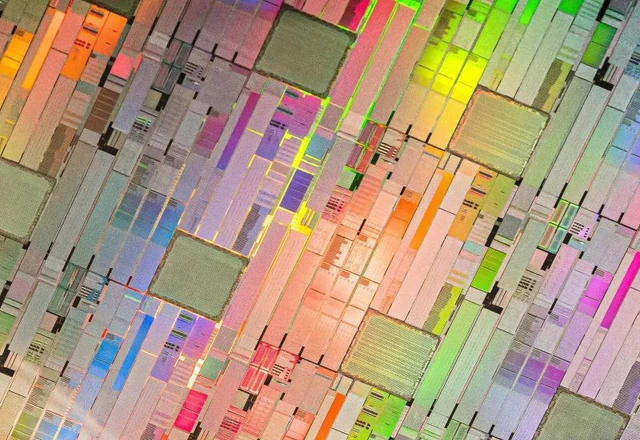
The manufacturing specifics of the Kirin 9050 Pro remain shrouded in mystery, as the exact process node has not been officially disclosed. However, performance analysis allows for cautious conclusions. An average power increase of 42% relative to the Kirin 9030 Pro suggests that the die's transistor density is comparable to TSMC's 3-nanometer solutions. To sustain this power, an advanced thermal dissipation system is employed, preventing thermal throttling and guaranteeing stable clock speeds even under the extreme loads of modern AAA gaming.
Following its premiere in the Mate XT 2 Ultimate Design, this processor will serve as the heartbeat of the upcoming Mate 90 series, defining the trajectory of mobile technology for years to come.
 The Triumph of 3nm Chip Manufacturing