The contemporary e-reader market has long been bifurcated into two distinct camps: cumbersome multimedia tablets and stripped-down, basic readers. Boox is attempting to carve out a new trajectory, returning to the fundamental essence of reading by aggressively minimizing the device's physical footprint. The new Picco model defies the prevailing trend toward versatility, championing a philosophy where portability and immediacy take precedence over the expansive functionality of a full-fledged operating system. It is a bold experiment in striking a balance between ergonomic comfort and software constraints.
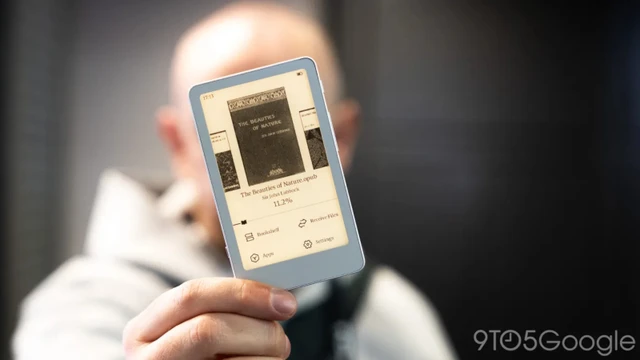
The debut of the Boox Picco at IFA 2026 in Berlin served as a manifesto for a return to basics. In an era where even the simplest devices strive for multi-functionality, the Picco bets everything on a single attribute: extreme compactness. The gadget is engineered to weave seamlessly into the fabric of daily life, fitting literally into a pocket, transforming it from a stationary reading device into a true companion for travel and short commutes.
For years, Boox’s strategy centered on Android integration, effectively transforming their e-readers into versatile tablets capable of supporting third-party software, from Google Play Books to Amazon Kindle. However, with the Picco, this approach has been completely reimagined. By stripping away the heavyweight OS, Boox has achieved record-breaking dimensions, with a screen diagonal of less than 4 inches. This decision is driven by a desire for a distilled user experience—one where the device does not distract the user with notifications and endless apps, but instead centers their attention solely on the written word.
The Picco’s technical execution is a study in premium minimalism. Its slim chassis is complemented by adjustable backlighting, ensuring comfort in any lighting condition, while the physical controls—customizable buttons and a page-turn rocker—restore the tactile satisfaction often sacrificed in the era of touch-centric interfaces.
Naturally, such compactness and an accessible $100 price point necessitate certain trade-offs. The absence of Android turns the device into a walled garden; users must limit themselves to the internal Boox catalog and standard EPUB files. While a dedicated smartphone app handles content synchronization, the burden of library curation now rests entirely with the owner.
From a contemporary industrial design perspective, the Picco could have reached new heights by adopting MagSafe or Qi2.2 wireless charging standards. Such integration would have allowed the reader to essentially "snap" onto the back of a smartphone, creating a unified information node. Instead, the manufacturer deliberately chose a path of simplification, prioritizing ergonomics and affordability.
Ultimately, the Boox Picco is a rare example of a device that resists the urge to be "everything to everyone." It is a tool for those who value having a library at their fingertips without the burden of superfluous functionality. Set for release in November, the gadget offers the market a compelling alternative: a pure, almost ascetic reading experience.
 AMD’s Strategic Approach to the Budget Segment