The race to commercialize low Earth orbit has hit a critical systemic snag. Boeing’s Starliner, envisioned as a cornerstone of NASA’s transportation infrastructure, is now mired in a profound technological and reputational crisis. A combination of technical oversights and managerial lapses has transformed what should have been a routine mission into a protracted crew rescue operation. Today, the program lingers in a state of limbo, with the timeline for the next uncrewed launch remaining frustratingly opaque.
The situation surrounding the CST-100 Starliner has evolved from a series of transient technical glitches into a protracted systemic crisis. Despite concerted efforts by Boeing and NASA to stabilize the situation, the timeline for the spacecraft's return to flight remains opaque. During a meeting of the Aerospace Safety Advisory Panel (ASAP), it was acknowledged that the next launch is unlikely to occur for at least another year—an admission that effectively dismantles the agency's previous optimistic projections.
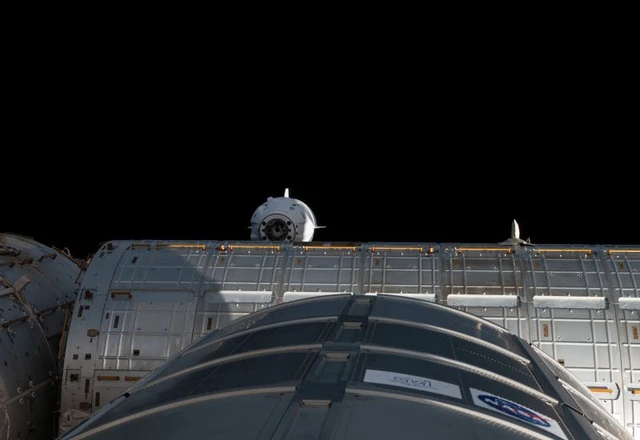
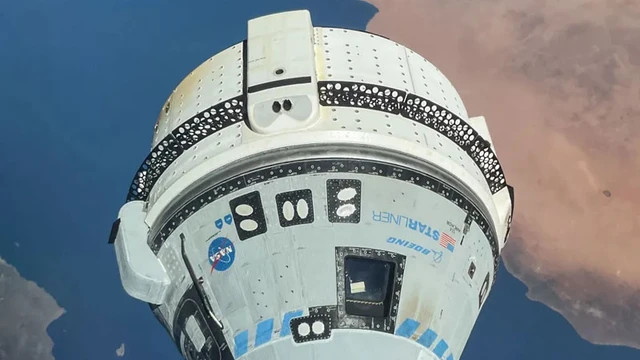
This trajectory of failure reached its zenith in June 2024, when Starliner departed for the International Space Station (ISS) with astronauts Suni Williams and Butch Wilmore on board. What was intended as a triumphant validation of the system's reliability devolved into a technological nightmare: during the rendezvous with the ISS, the spacecraft suffered critical failures of its reaction control system (RCS) thrusters, compounded by helium leaks. Consequently, NASA was forced to make an unprecedented decision: leave the crew on the station to avoid an unjustifiable risk during reentry.
This resulted in a sort of "orbital castaway" scenario that spanned nine months. While the unmanned Starliner returned to Earth in September 2024, the astronauts were only able to leave orbit in March 2025, utilizing a SpaceX Crew Dragon capsule. This incident not only exposed the technical inadequacy of Boeing's current iteration but also highlighted NASA's critical dependence on a single private contractor.
The analysis of the failure, presented in a February report by an independent commission, was scathing. Experts pointed to systemic errors in decision-making and mission management. Most alarming was the decision to classify the incident as a Type A accident. In NASA's hierarchy, this is the most severe category of occurrence, placing the Starliner failure in the same echelon as the Challenger and Columbia tragedies. Such a classification indicates that the problem is not localized, but fundamental.
The technical crux of the problem lies within the service module. The primary "limiting factors" remain the unstable performance of the attitude control thrusters and critical overheating in the compartments where they are housed. The Reaction Control System (RCS) is a mission-critical component; without its flawless operation, precise docking with the ISS and a safe descent through the dense layers of the atmosphere are impossible. Until Boeing proposes a radical solution for heat dissipation and valve reliability, returning humans to the cockpit remains off the table.
Nevertheless, both parties maintain that they are not abandoning the certification of Starliner for crewed missions. NASA and Boeing are currently attempting to align on the acceptance criteria for the next uncrewed flight, which is intended to serve as a definitive "qualifying exam" before crews are permitted to return.
However, guided by the principles of redundancy and safety, NASA is already preparing a "Plan B." In recent procurement documents, the agency indicated its intention to expand its contract with SpaceX, adding six additional Crew Dragon flights. This is a strategic maneuver: should Starliner fail to return to service in the near future or prove permanently unfit, SpaceX will cover all crew transportation needs until the ISS is decommissioned in 2030. Consequently, Boeing risks being remembered as a costly and failed experiment, while SpaceX's de facto monopoly on human orbital transport only tightens.
 The End of the Falcon 9 Era