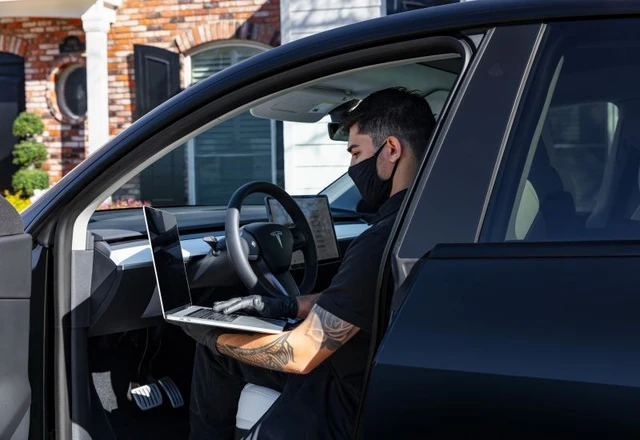
The drive toward radical minimalism in automotive design has forged a perilous compromise, pitting external aesthetics against fundamental safety. Electronic locks, while delivering a seamless user experience in daily operation, can transform into insurmountable barriers during critical emergencies. A massive recall of millions of electric vehicles in China has exposed a systemic industry failure: the disregard for intuitive emergency egress. This case now serves as a catalyst for a global reassessment of human-machine interface (HMI) standards under catastrophic conditions.
The electric vehicle industry has hit a critical inflection point, one that calls into question the priorities of modern industrial design. A sweeping recall affecting nearly three million vehicles—including Tesla and eleven other manufacturers in the Chinese market—has exposed a critical vulnerability: the prohibitive difficulty of accessing mechanical door locks during accidents or fires. The remedy is almost farcical; rather than a fundamental engineering overhaul, owners are being provided with warning stickers detailing manual override instructions and a software update.
The crisis stems from a global pivot toward digitized access. The shift to electronic locks, integrated with smartphones and NFC cards, has enabled streamlined bodywork and a frictionless user experience. Yet, this architecture creates a precarious dependency on power supply and circuit integrity. In the event of a severe collision or short circuit, automation fails, leaving the mechanical lever as the sole lifeline. The issue is that in the pursuit of "clean lines," designers have tucked these levers behind decorative panels or placed them in obscure locations, transforming an emergency evacuation into a complex puzzle—one nearly impossible to solve while in shock or amidst smoke.
Regulators are now responding to this ergonomic crisis. Following a two-year investigation, China has effectively declared war on hidden handles, banning their use in new models starting in 2027. Simultaneously, U.S. road safety agencies have launched an inquiry into Tesla's locking systems. The focus of American regulators is the development of new standards that mandate emergency release mechanisms be "intuitive and easily accessible." This marks a paradigm shift from the concept of a "hidden backup" to one of "obvious rescue."
The Tesla case is not an isolated incident; it is a symptom of a broader philosophy in modern EV engineering. Rivian, for instance, faced harsh criticism over its R1 models, where manually opening a door practically required the passenger to dismantle an interior panel and pull a cord—a procedure utterly unacceptable in an emergency. Acknowledging the flaw, the manufacturer has pledged to rethink the placement of these mechanisms in the upcoming R2. Ford encountered similar hurdles; sales of the Mustang Mach-E were temporarily paused due to the risk of electronic lock failure during total system power loss.
This situation serves as a stark reminder for the tech industry: technological advancement must not compromise fundamental safety principles. Tesla, the primary evangelist of flush handles and digital locks, is now forced to re-evaluate its design approach for future models. It is clear that the era of "design for design's sake" is drawing to a close, giving way to a functional pragmatism where the right to a swift, intuitive exit takes precedence over the seamless aesthetics of the chassis.
 The Price of Acceleration: CXMT’s Rapid Push into Memory