The contemporary content landscape is placing unprecedented demands on data throughput, driven primarily by the ascent of 8K and 12K video resolutions. For too long, external storage has served as the primary bottleneck in professional workflows, stifling creative potential and hindering efficiency. Samsung’s latest SSD lineup is redefining the paradigm of portable storage by integrating the USB4 standard, effectively transforming a conventional external drive into a high-performance instrument capable of seamless, real-time data manipulation.
The external storage landscape has entered a new era of evolution with the unveiling of the P series at Gamescom 2026. At the center of this shift are the P9 and P7 models, which effectively blur the line between internal and external SSDs. The primary technological catalyst is the implementation of the USB4 Gen 3×2 interface, delivering a massive throughput of up to 40 Gbps.
The flagship P9 delivers staggering performance metrics: sequential read speeds reach 4,000 MB/s, while write speeds hit 3,800 MB/s. To appreciate the scale of this progress, one only needs to compare these figures with the previous generation. For instance, the T9, based on USB 3.2 Gen 2×2, was capped at 2,000 MB/s. In essence, Samsung has managed to double the performance—a leap that is critical for modern professional workstations.
This surge in speed transforms the drive from a mere "archival vault" into an active production tool. Samsung positions the P9 as the ideal solution for high-end video production. Its high sustained write speeds enable direct capture of video in resolutions up to 12K and allow for the seamless editing of heavy RAW files without the need to first offload them to an internal system drive.
A critical technical nuance is the operation of the Intelligent TurboWrite technology. This mechanism leverages a portion of the memory in SLC-caching mode to achieve peak bursts. Once this resource is exhausted, the device reverts to its sustained write speed: 2,000 MB/s for the 2TB version and 1,000 MB/s for the 1TB model. Nevertheless, even these baseline figures remain highly competitive against most current market offerings.
A standout achievement is the 8TB version of the P9. Currently, it is the world's first portable SSD to combine such massive capacity with USB4 support and 4,000 MB/s speeds. The device's engineering excellence has already been recognized with a CES 2026 Innovation Award.
Alongside the flagship, Samsung introduced the P7. While the P9 is engineered for maximum performance, the P7 is designed as a versatile, all-purpose tool. It also supports USB4 but prioritizes reliability and broad compatibility across a wide spectrum of devices—from gaming consoles and cameras to smartphones and laptops. Physical durability is a key focus here: the drive has successfully passed two-meter drop tests, as well as rigorous vibration and shock resistance certifications.
The overall architecture of both devices is meticulously crafted. Data security is ensured via hardware-based AES 256-bit encryption, while system management is handled through the proprietary Samsung Magician software. The form factor remains compact: 90 × 65 × 8.3 mm with a weight of approximately 96–98 grams, allowing for seamless integration into any mobile setup.
The commercial rollout is scheduled for August 31. The lineup includes capacities of 1, 2, 4, and 8 TB. Pricing for the flagship P9 ranges from $339.99 for the base model to $2,699.99 for the maximum capacity. The P7 is offered at a more accessible price point, ranging from $289.99 to $2,289.99. The manufacturer provides a five-year limited warranty, underscoring their confidence in the longevity of these solutions.

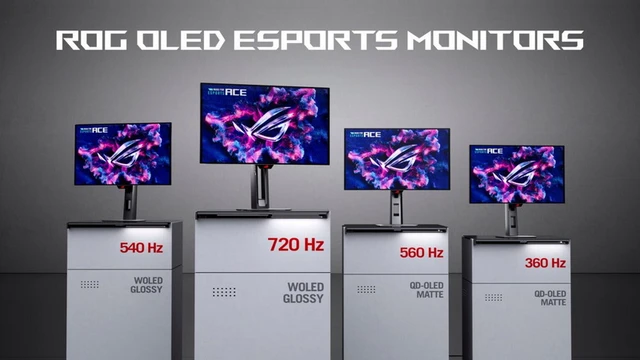 The Speed Limits of Modern Gaming Displays