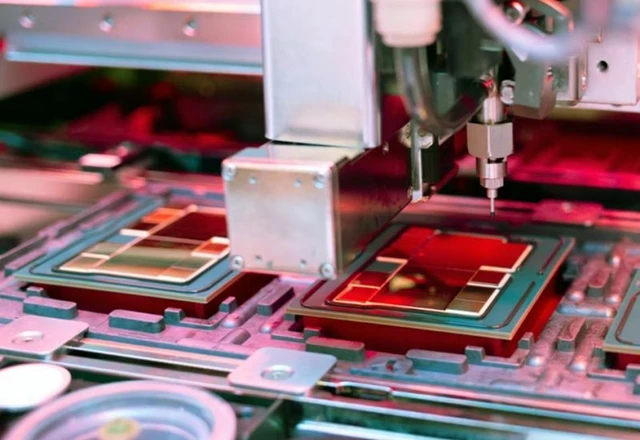
The global AI arms race is fundamentally reshaping the semiconductor landscape. Surging demand for High Bandwidth Memory (HBM) is cannibalizing production capacity, triggering an unforeseen shortage of commodity components. This has led to a market anomaly: the price of legacy DDR4 modules is climbing more steeply than that of their modern successors. Such a shift underscores the modern world's critical reliance on legacy infrastructure.
The modern semiconductor market is undergoing a peculiar metamorphosis. While consumer demand for laptops and PCs shows signs of plateauing or even declining, the cost of memory components continues to climb. The primary catalyst is the meteoric rise of generative AI, which demands massive memory capacities with extreme bandwidth.
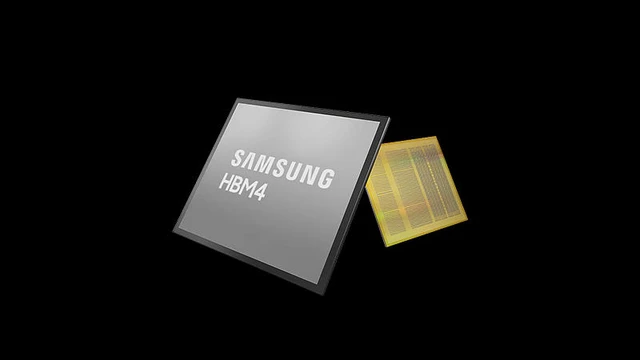
At the center of this shift is High Bandwidth Memory (HBM). Unlike standard modules, HBM utilizes a vertically stacked chip architecture integrated directly into AI accelerators. However, this performance comes at a significant cost in terms of silicon real estate: HBM production requires substantially more wafers than traditional DRAM. In a bid to maximize margins in the most lucrative segment, manufacturers are pivoting their production lines toward HBM and server memory, effectively cannibalizing the capacity for standard chips.
This has triggered a crowding-out effect. Standard 8Gb DDR4 chips have become scarce. According to data from the analytical agency TrendForce, contract prices for this memory type are showing steady growth, with costs increasing nearly ninefold over the last decade. The situation has reached a critical tipping point, resulting in a price inversion: legacy DDR4 modules are now trading at a premium over the more advanced and efficient DDR5 modules.
The market dynamics are counterintuitive. Despite a projected 10.5% decline in laptop shipments this year, memory suppliers maintain a tight grip on pricing. Expectations for PC DRAM contract prices in the third quarter have been revised upward, reaching a range of 18–23%. Fearing a total shortage, electronics manufacturers have begun strategic stockpiling, further fueling the price surge.
Similar, albeit more nuanced, trends are appearing in the NAND flash segment. Here, the market has split into two distinct camps. Modern 128Gb MLC chips are showing relative stabilization, as buyers have hit a price ceiling and are no longer willing to pay a premium for increased capacity.
Conversely, the legacy SLC chip segment is experiencing a price storm. Costs for certain components have surged by over 20%, and in some instances, nearly 30%. This is because the industry has almost entirely pivoted to high-margin 3D NAND, leaving legacy solutions marginalized. Meanwhile, demand for SLC remains steady, as it remains indispensable for specialized equipment—such as telecommunications hubs and smart metering systems—where reliability and endurance take precedence over storage density.
Ultimately, we are witnessing a systemic realignment. Technological leaps in AI are creating "blind spots" in the production of foundational components. The industry is so focused on engineering the ultra-powerful solutions of tomorrow that it is losing control over the cost and availability of the infrastructure required for today.
 The Horizon of China's Technological Sovereignty in Lithography