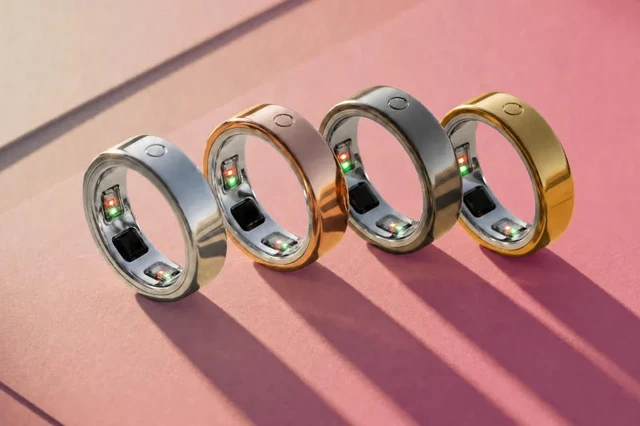
The wearables market is undergoing a quiet revolution, pivoting away from vivid displays toward discreet yet profound health monitoring. By eschewing the screen, manufacturers can drastically extend battery life and reduce cognitive friction, transforming the device into a seamless extension of the human body. French brand Circular aims to redefine this segment by fusing clinical-grade diagnostics with everyday utility. The new Ring 3 Pro and Slim models represent an ambitious attempt to create a versatile tool—one that transcends mere data collection to actively engage with its user.
The contemporary shift toward "screenless" wearables is driven by a growing appetite for digital minimalism. While smartwatches often become just another source of notification-induced stress, smart rings offer a compelling alternative: deep physiological analysis devoid of visual clutter. Historically, the absence of an interface limited such devices to the role of passive sensors. Circular aims to disrupt this paradigm with the Ring 3 Pro and Slim, integrating tools for active interaction.
The pivotal technological leap here is the introduction of a haptic engine and NFC support. The ring is no longer merely a sleep and heart rate tracker; it has evolved into a functional payment instrument and a tactile notification system. Haptic feedback allows the device to discreetly signal important events, remind the user of medication, or alert them to critical health changes without drawing external attention.
From a clinical perspective, Circular is doubling down on serious diagnostics. The Ring 3 Pro features ECG capabilities and an atrial fibrillation detection system, both of which have received FDA clearance. This elevates the device from a consumer gadget to a tool for preliminary medical screening. Furthermore, the platform analyzes blood pressure trends and glucose fluctuations, alongside advanced sleep quality metrics. It is important to note that these latter features lack FDA certification and should be viewed as prompts for professional medical consultation rather than definitive diagnoses.
The distinction between the two models lies in their material composition and market positioning. The Ring 3 Pro is crafted from titanium and boasts the full sensor suite, including ECG and blood pressure monitoring, with a battery life of up to 12 days. In contrast, the Slim model caters to those prioritizing aesthetics and lightness; its chassis is made from a biocompatible polymer resin with a titanium finish. It is slightly more compact, offers a shorter battery life of up to 10 days, and omits several advanced medical functions.
Amidst fierce competition from giants like Oura, Whoop, and Google, Circular is pursuing a strategy of accessibility. Unlike many competitors who mandate monthly subscriptions to access one's own data, Circular provides basic health metrics and its AI assistant, Kira AI, free of charge. However, the business model may evolve: certain advanced medical features in the app are already marked as time-limited, hinting at a potential shift toward a paid tier for professional-grade medical analysis.
Ultimately, the Circular Ring 3 represents an attempt to strike a balance between a medical instrument and a daily accessory. The combination of a titanium build, payment capabilities, and certified diagnostics positions these devices as a formidable challenge to the leaders of the wearables market.
 The Evolution of Ultrabooks: Driven by Solid-State Cooling