The budget laptop market is transcending its reputation as a realm of purely pragmatic compromises, shifting its focus toward lifestyle aesthetics. While Apple remains anchored in a rigorous, calculated minimalism, its competitors are pivoting toward visual expression and deep customization. Lenovo’s new IdeaPad Vibe embodies this strategic shift, positioning the device not merely as a functional tool, but as a full-fledged accessory. It is a product designed to recalibrate the equilibrium between affordability and emotional appeal.
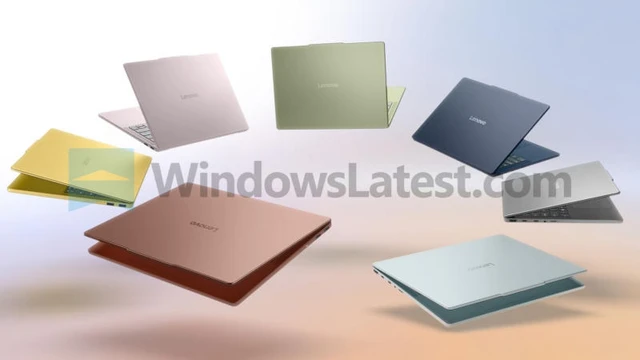
The debut of the IdeaPad Vibe marks Lenovo's strategic move to create a direct counterweight to Apple's budget-tier initiatives—specifically the MacBook Neo concept. The primary lever of influence here is color: while the Cupertino giant remains tethered to a conservative palette, Lenovo is launching a full-scale chromatic expansion. With seven available finishes—ranging from soft pink and mint turquoise to deep navy and terracotta—the device is transformed from a standard office tool into a statement piece for self-expression. The attention to detail is particularly noteworthy; the manufacturer's logo on the lid is rendered in a tone-on-tone finish, reinforcing the design's cohesive aesthetic.
The laptop's visual language adheres strictly to the tenets of modern minimalism. Slim bezels maximize the available screen real estate, while the centrally positioned webcam, featuring an integrated physical privacy shutter, addresses contemporary user demands for security and privacy. The ergonomics remain classic: a dark gray keyboard with high-contrast white characters sits alongside a generous touchpad and symmetrically placed speaker grilles, creating a sense of balance and clean lines.
When it comes to functionality, Lenovo has opted for pragmatism, consciously eschewing the radical port reduction for which Apple is renowned. The IdeaPad Vibe's connectivity suite is significantly broader, tailored for real-world usage scenarios that eliminate the need for a constant rotation of dongles. The right edge features two USB Type-A ports and an illuminated power button, while the left side integrates HDMI, two USB Type-C ports, an audio jack, and a microSD card slot. This approach transforms the device into a versatile workstation capable of interacting with almost any peripheral "out of the box."
The most intriguing aspect of the device remains its internal silicon. According to available data, Lenovo plans to employ a hybrid strategy, offering models powered by both AMD processors and the Qualcomm Snapdragon platform. This decision reflects the industry's global pivot toward Arm architecture, which promises unprecedented energy efficiency and battery life comparable to mobile devices. Simultaneously, support for AMD's x86 solutions ensures seamless compatibility with traditional software. Consequently, the IdeaPad Vibe is not merely an affordable alternative to the MacBook, but a testing ground where two distinct computing philosophies collide within a single chassis.
 The Price of Acceleration: CXMT’s Rapid Push into Memory