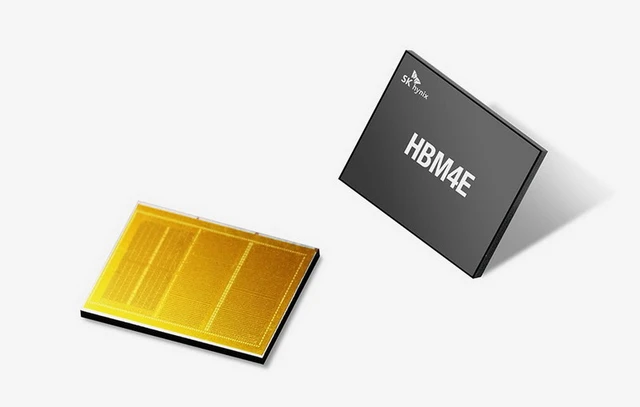
For years, the global semiconductor landscape has been anticipating a disruptor capable of challenging the hegemony of South Korea's industry titans. The foray of China's CXMT into the DDR5 segment was widely viewed as the primary catalyst for driving down memory prices. Yet, the reality has proven far less dramatic: an increase in supply failed to trigger the anticipated price crash. This case underscores the profound disconnect between state-driven subsidies and the actual mechanics of market pricing.
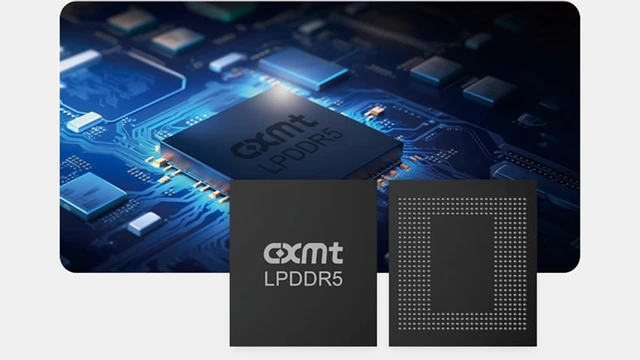
For a long time, the high-performance memory market has been under tight oligopolistic control, with Samsung and SK hynix effectively dictating the rules of engagement. The emergence of modules based on CXMT chips was poised to be the "black swan" that would crash DDR5 prices through aggressive dumping and expanded production capacity. However, an analysis of current market offerings suggests that economies of scale remain largely theoretical.
In practice, the price delta between the established leaders and the new Chinese entrant is negligible. Looking at 64GB DDR5-5600 RDIMM modules on JD.com, solutions from Samsung or SK hynix are priced at approximately $2,745, while CXMT equivalents hover around $2,805. This 2.2% gap not only fails to provide a tangible benefit to the buyer but also calls into question the very concept of a "cheap Chinese alternative." For comparison, on Western markets such as Amazon, similar modules can be found for less—around $2,425—highlighting regional pricing nuances and logistical complexities.
The technological divide between CXMT and the Korean giants remains significant. The Chinese manufacturer employs an older DRAM fabrication process, which inevitably leads to several technical compromises. CXMT chips exhibit higher power consumption and offer lower performance headroom. Furthermore, their overclocking potential is substantially limited compared to cutting-edge solutions from competitors. Consequently, the consumer is presented with a product that is technically inferior yet priced identically to the market leaders.
The paradox of the situation is that CXMT, much like its peer YMTC, benefits from massive state support. While subsidies lower internal production costs, these advantages do not trickle down to the end user. In the memory industry, product pricing is determined not only by silicon costs but by overall market dynamics. With aggregate capacity remaining constrained, manufacturers have little incentive to engage in price wars that could erode margins across the entire sector.
An additional barrier is the rigorous quality filtering implemented by major OEMs such as Apple, Dell, and Corsair. Stringent validation and certification procedures mean that even if CXMT chips become more available, they must undergo an extensive vetting process before entering mass-market devices. This creates a time lag between increased production volumes and actual retail price reductions.
Ultimately, while CXMT's expansion aids in diversifying supply chains and increasing overall component availability, it has not acted as the price catalyst the market anticipated. Semiconductor economics have proven more resilient to new entrants than expected, and technical excellence remains the primary lever in the battle for the premium memory segment.
 Power and Poise: The Xiaomi Pad 9 Pro Max