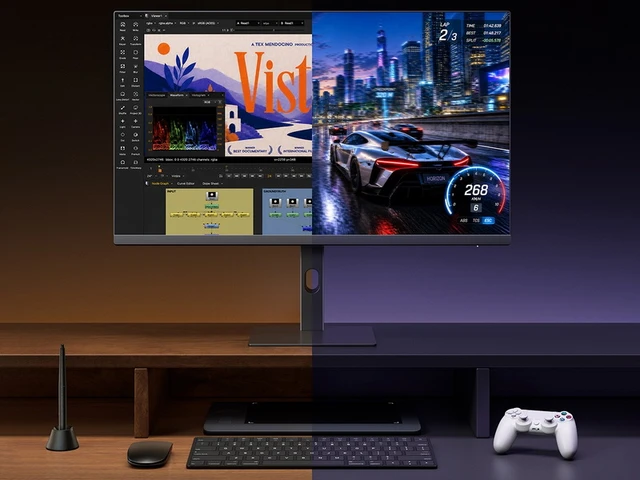
The contemporary monitor market is witnessing a steady convergence of professional-grade tools and gaming-centric solutions. Users are no longer willing to compromise between razor-sharp pixel density and fluid motion. Xiaomi is addressing this demand by refreshing the Redmi A27U lineup, offering versatile configurations tailored to a variety of use cases. The central objective is the pursuit of the ideal equilibrium between 4K resolution and a high refresh rate.
The ideal of the "universal monitor" envisions a device capable of seamlessly pivoting between professional color grading, high-octane gaming, and everyday productivity. The updated Redmi A27U embodies this philosophy, entering the market with two distinct configurations tailored to different performance priorities.
The flagship variant, designated P27UEC-RA, is engineered for those demanding maximum versatility. It supports two fundamentally different operating modes: a native 4K resolution (3840 × 2160 pixels) at a 120Hz refresh rate for content creation, and a 1080p mode at 240Hz for competitive gaming, where reaction speed is paramount. The second modification (P27UEB-RA) serves as a more conservative productivity tool, offering a stable 4K output at 75Hz.
Under the hood, both models share an identical technical foundation. At the core is an IPS panel, ensuring wide viewing angles and natural color reproduction. The panel reaches a peak brightness of 400 nits—validated by the VESA DisplayHDR 400 certification—allowing for deeper contrast and enhanced detail in both the highlights and shadows of the frame. A 6ms response time stands as an acceptable industry standard for IPS panels of this class, effectively minimizing noticeable motion blur.
Visual fidelity is a primary focus. The monitors boast 100% sRGB and 98% DCI-P3 color gamut coverage, making them viable tools for entry-level video editing and graphic design. Furthermore, factory calibration ensures a high degree of color accuracy straight out of the box, sparing the user from tedious manual adjustments.
Modern workflows demand a minimalist cable footprint, and the Redmi A27U addresses this via a USB Type-C port. Supporting 90W Power Delivery, the port essentially transforms the monitor into a full-fledged docking station: a single cable transmits the video signal from a laptop to the screen while simultaneously charging the device.
The connectivity suite is rounded out by two HDMI 2.1 ports and one DisplayPort 1.4, guaranteeing compatibility with current-gen GPUs and consoles. For peripherals, the unit provides two USB 2.0 Type-A ports, alongside a standard 3.5mm audio output.
From a market positioning standpoint, these devices remain highly accessible. In China, the 240Hz version is priced at 1,999 yuan (approximately $297), while the streamlined model is offered at 1,699 yuan (approximately $253). Given the trajectory of previous generations, it is expected that these models will soon hit the global market, offering users high resolution and robust functionality at a democratic price point.
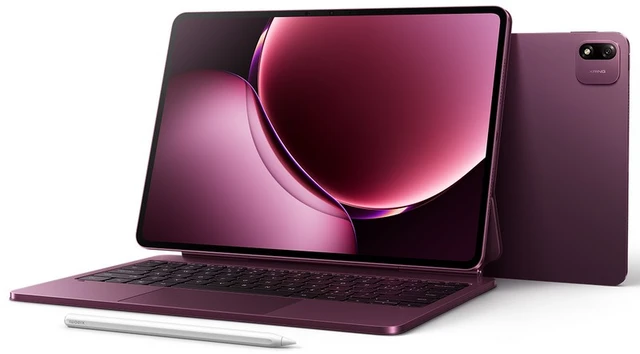 Power and Poise: The Xiaomi Pad 9 Pro Max