Global industrial automation is undergoing a fundamental paradigm shift, transitioning from rigid, hard-coded algorithms toward cognitive flexibility. Japan, once the undisputed hegemon of robotics, has spent recent decades grappling with intensifying pressure from global competitors. Today, the convergence of generative AI and edge computing is paving the way for a technological resurgence for the Land of the Rising Sun. By fusing its legendary hardware precision with the transformative power of neural networks, Japan is poised to redefine the very essence of modern manufacturing.
During the 1980s, Japanese electronics and robotics were the gold standard of technological supremacy. In that era, Japan effectively dictated the global pace, commanding up to 80% of the industrial manipulator market. However, a subsequent period of stagnation, coupled with the aggressive rise of competition from Europe and China, saw Japan's market share plummet by half. To reclaim its lost influence, Japanese engineers are now betting on a powerful synergy between classical mechanics and cutting-edge artificial intelligence.
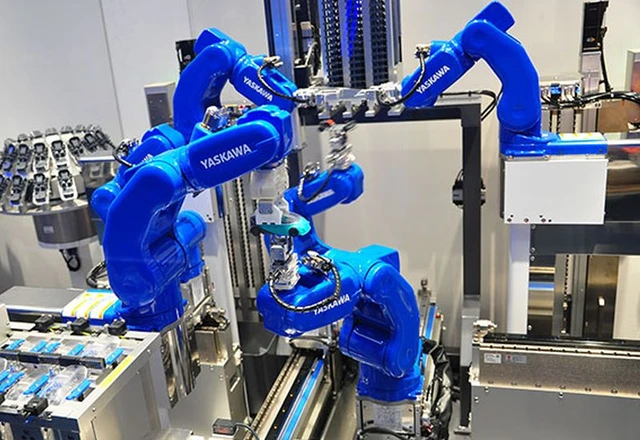
Yaskawa Electric has emerged as a vanguard of this revitalization. The implementation of AI across their new factories has yielded impressive results, effectively doubling labor productivity. Currently, approximately one-third of the hundred robots deployed at their facilities possess intelligent functions, fundamentally transforming the organizational approach to labor.
The fundamental divergence between a traditional robot and its "intelligent" successor lies in flexibility. Legacy models were constrained by rigid programming; a single line could typically produce only two or three product variants. In contrast, modern systems—specifically the Yaskawa Motoman Next series—are capable of handling up to 12 different products on a single line. This shifts production from a static conveyor belt to a dynamic, adaptive ecosystem capable of pivoting instantaneously to meet fluctuating demand.
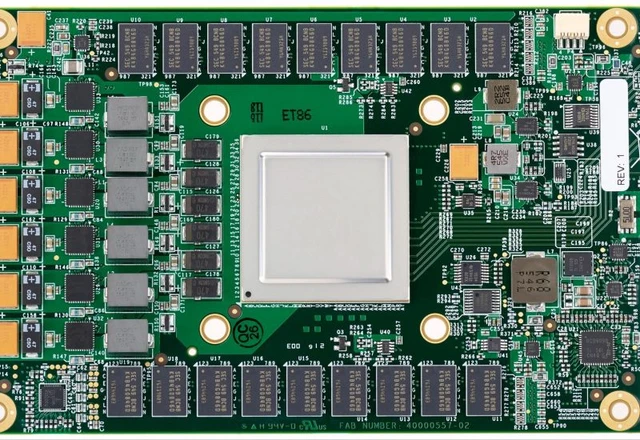
This quantum leap was catalyzed by a strategic partnership with Nvidia. Each Motoman Next robot is equipped with its own dedicated GPU, enabling heavy computational workloads to be processed directly "on-board." This edge computing capability allows for the use of advanced software for real-time robot learning, evolving these machines from simple executors into autonomous agents.
The disparity in efficiency is evident even in the most rudimentary operations, such as fastening screws. A traditional robot, encountering the slightest deviation or error, simply grinds to a halt, requiring human intervention and causing costly downtime. An intelligent system, conversely, can analyze the failure and iterate its approach, achieving a successful completion rate of nearly 100%.
Yaskawa's roadmap involves delegating truly complex tasks to these machines, such as electrical wiring or the assembly of multi-component products. The ambition is steep: to raise the level of factory automation from the current 40% to 90%. While regaining the absolute hegemony of the 1990s is complicated by the massive surge of Chinese manufacturers, Japan aims to recapture a significant portion of the market through the superior quality and reliability of its solutions.
Simultaneously, Fanuc is exploring the frontiers of human-machine interaction through natural language processing. A prototype of their new robot, integrated with the Google Gemini platform, can understand voice commands and even recognize text from physical documents. This dismantles the barrier between complex machinery and personnel, allowing even unskilled employees to manage sophisticated systems without months of specialized training.
Japan is wagering that its impeccable reputation for industrial hardware, fused with advanced AI, will create a value proposition irresistible to global corporations striving for maximum operational efficiency.
 The Price of Acceleration: CXMT’s Rapid Push into Memory