The global high-tech rivalry has shifted from the realm of software to the domains of fundamental physics and precision engineering. Restrictions on the supply of Extreme Ultraviolet (EUV) lithography systems have transformed access to cutting-edge chipmaking into a primary geopolitical lever for exerting pressure on China. Yet, industry leaders suggest that this technological blockade may prove to be merely a temporary hurdle. The central debate now revolves around whether China can bridge the engineering gap and achieve semiconductor autonomy by the end of the decade.
The global microelectronics market is effectively held hostage by a single entity: the Dutch firm ASML, the sole provider of Extreme Ultraviolet (EUV) lithography systems. Since 2019, the export of these critical installations to China has been completely blocked, creating a severe deficit of the tools required to manufacture chips at the most advanced process nodes. With official supply channels severed, Beijing's only viable path forward is the development of its own proprietary equipment.
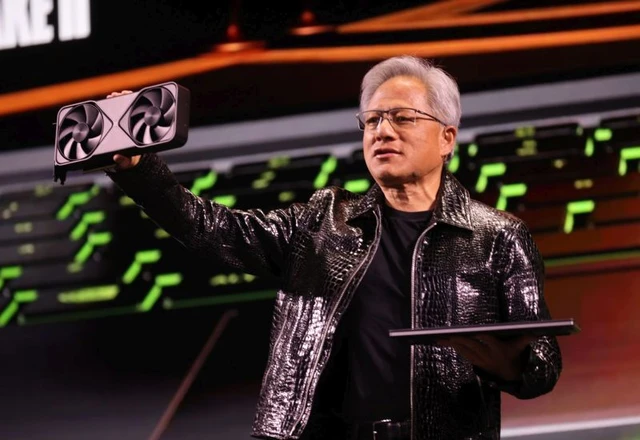
Jensen Huang, CEO of Nvidia, is confident that this transition is inevitable and will be realized by 2030. His optimism is rooted in China's unparalleled capacity for scaling production and rapidly implementing proven technologies. From Huang's perspective, a window of a few years is negligible for an economy of such magnitude, and current hurdles are merely an adaptation phase preceding a quantum leap in capability.
However, the technical reality is far more complex than these optimistic forecasts suggest. Lithography is not simply a matter of assembling a machine; it is a convergence of incredibly intricate physical processes. The primary domestic player, SMEE, currently operates predominantly with "dry" lithography systems using a 193nm wavelength. These systems enable the production of chips at the 90nm node—a specification that, by modern standards, represents a profound technological deficit.
A more advanced stage is immersion lithography, which theoretically allows for a threshold of 28nm. Despite reports of the development of such scanners, the market has yet to see evidence of their ability to operate in mass production with the necessary wafer yields. Even if the equipment becomes fully operational in the near term, transitioning to the large-scale production of such components could take several more years, pushing the actual timeline for success toward 2028–2029.
The gap becomes critical when transitioning to EUV lithography, which utilizes a wavelength of 13.5nm. This represents an entirely different echelon of complexity: reflective optics, operation within an ultra-high vacuum, and photon management at the very limits of material science. While there are reports that Chinese scientists have successfully created the required light sources, the absence of fully functional scanner prototypes makes achieving parity with ASML by 2030 highly improbable.
Nevertheless, this predicament provides a unique catalyst for internal growth. Forced into isolation, the Chinese industry is compelled to pour colossal resources into import substitution. In the long run, this may lead to the creation of an alternative technological ecosystem that, while slower, inevitably closes the gap with global leaders. Whether China can achieve this breakthrough by the end of the decade remains an open question, but the current trajectory points toward a drive for total technological sovereignty.

 Forecasting Exponential Growth in Nvidia Shipments