Apple is gearing up to penetrate the foldable device market—a territory that has long been the exclusive domain of South Korean and Chinese tech titans. The anticipated iPhone Ultra represents more than a mere shift in form factor; it signals a fundamental strategic pivot in the company's hardware philosophy. Yet, the transition to flexible displays brings formidable technological hurdles, particularly when scaling for mass production. The collision of feverish demand and constrained manufacturing capacity is poised to turn the new device into a rare commodity, accessible to only a select few during its initial launch window.
Apple's September keynote traditionally serves as the catalyst for a new technological cycle. This year, anticipation centers not only on the iPhone 18 Pro lineup but also on the ambitious debut of the foldable iPhone Ultra. Despite being one of the most anticipated gadgets of the decade, the device's journey from the assembly line to the end consumer promises to be fraught with challenges. According to analysis by Ming-Chi Kuo, a mere desire to purchase the novelty on launch day will not suffice: production hurdles could result in Ultra pre-orders opening significantly later than those for the standard Pro flagships.
The core issue lies in the difficulty of scaling the production of foldable displays, where Apple's benchmarks for quality and durability traditionally exceed industry averages. Total shipments of foldable models in 2026 are expected to reach approximately 7–8 million units. However, this volume will be distributed highly unevenly. In the third quarter, only 0.5 to 1 million devices are expected to hit the market—a mere 10% of the annual target. Such a limited supply will inevitably trigger a severe shortage.
With delivery windows potentially stretching to 4–6 weeks or more, and actual availability limited well into December, the market will likely react with a surge in speculative demand. With an official price point ranging from $2,300 to $2,500, the iPhone Ultra's resale value could spike by 50–100%. This would transform the smartphone from a high-tech tool into an exclusive status symbol, accessible only to those willing to pay a premium for immediate ownership.
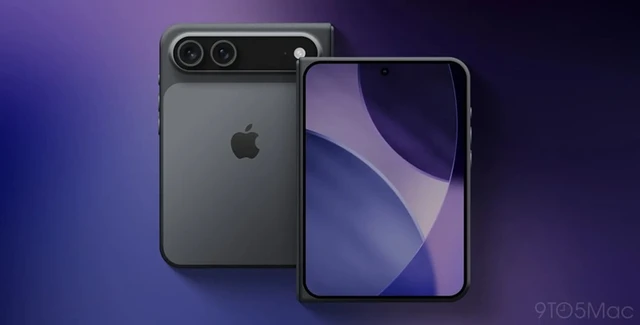
The technical specifications of the iPhone Ultra are designed to justify both the steep price and the wait. The device will feature an impressive 7.76-inch primary display and a 5.49-inch secondary external screen, effectively rendering it a hybrid between a smartphone and a compact tablet. Under the hood, it will be powered by the A20 Pro chip paired with 12GB of RAM—the essential baseline for efficient multitasking on a large-format screen.
Engineers have placed particular emphasis on ergonomics and battery life. A 5,500 mAh battery is intended to sustain the power-hungry foldable display. Meanwhile, when unfolded, the chassis thickness will be less than 5mm. This metric makes the iPhone Ultra even more slender than the conceptual iPhone Air, underscoring Apple's commitment to extreme minimalism in industrial design, despite the inherent complexity of the hinge architecture.
 The Evolution of Apple's Augmented Reality Ecosystem