The origin of life remains one of the most profound enigmas of modern science, existing at the intersection of chemistry and astrophysics. For decades, researchers have grappled with whether complex organic compounds could emerge within the sterile void of space long before the Earth ever took shape. The recent detection of erythrulose molecules at the center of the Milky Way provides a significant catalyst for research into prebiotic chemistry, lending weight to the hypothesis that the fundamental building blocks of life are ubiquitous throughout the cosmos.
The quest for organic molecules in interstellar space is akin to searching for a needle in a cosmic haystack, where the "needle" is a complex carbon chain capable of serving as a blueprint for biological life. For years, astronomers were content with the detection of glycolaldehyde—a simple two-carbon molecule. However, by strict chemical standards, such compounds cannot be classified as true sugars. To earn that designation, a molecule's carbon skeleton must consist of at least three links.
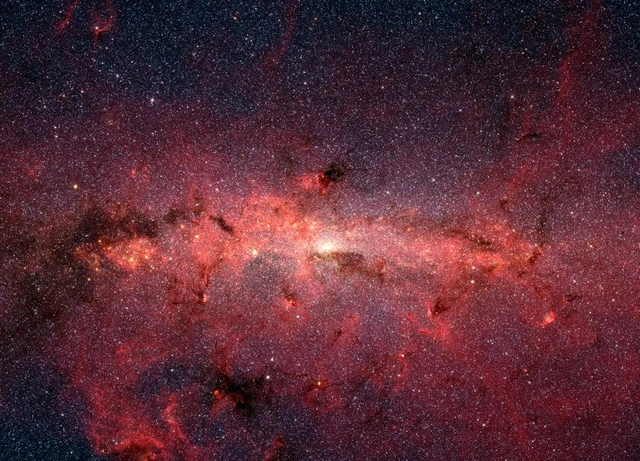
A significant breakthrough arrived with the discovery of erythrulose, often referred to as "raspberry sugar," which contains four carbon atoms. This molecule was detected within a dense cloud of gas and dust situated near the center of our Galaxy. For the scientific community, this was a landmark event: erythrulose is the first "true" sugar discovered directly within the interstellar medium, rather than within meteorite samples recovered on Earth.
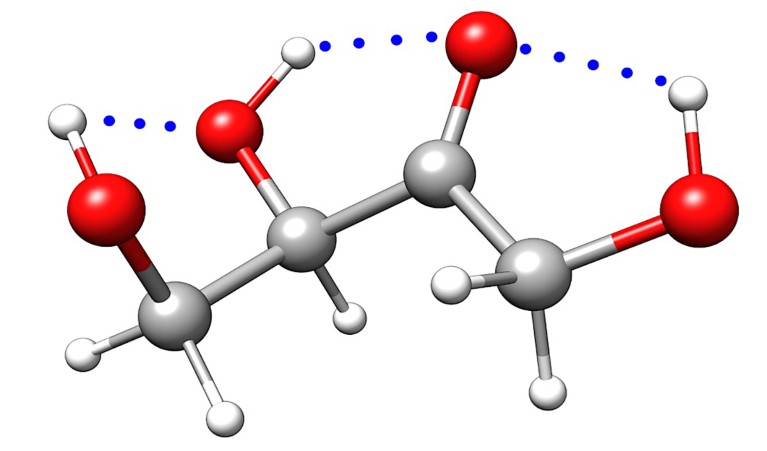
The detection methodology relied on the principles of spectroscopy—the analysis of unique wavelength "fingerprints" emitted by specific molecules. The process was an exercise in intellectual synthesis: physical chemists provided precise spectroscopic data for erythrulose, which were then cross-referenced with observational datasets from molecular clouds across the Milky Way. Initial skepticism among researchers gave way to certainty as the signal emerged clearly from the data; subsequent verification via the powerful Yebes and IRAM radio telescopes definitively confirmed the substance's presence.
This discovery carries profound implications for our understanding of the evolution of matter. Previously, ribose—a five-carbon sugar that forms the backbone of RNA and DNA molecules—had been identified in ancient meteorites. The fact that such structures exist in open space reinforces the theory that the essential building blocks of life may have been delivered to the nascent Earth via cosmic collisions.
Ultimately, the discovery of erythrulose closes a critical gap in the chain of chemical evolution. It demonstrates that the universe is capable of synthesizing complex sugars independently, transforming frigid gas clouds into gargantuan natural laboratories. This brings us closer to answering a fundamental question: is the emergence of life a stochastic local accident, or a predictable consequence of chemical processes operating throughout the Galaxy?
 Optical Technologies for Combating Counterfeiting