The global AI arms race has shifted its center of gravity: the battle is no longer fought solely over algorithmic innovation, but over the availability of raw compute power. However, the conservative nature of the banking sector often fails to keep pace with the explosive growth of AI startups, creating a financial chasm between the surging demand for GPUs and the actual capacity to finance their procurement. In response, Nvidia is evolving beyond its role as a mere hardware vendor to act as a financial guarantor for specialized cloud providers. This strategic pivot enables the company to scale its market footprint while mitigating its reliance on the industry's dominant hyperscalers.
The modern AI computing market has encountered a structural paradox: while the demand for GPUs is astronomical, the mechanisms for financing their procurement remain archaic. This friction is most evident within "neo-cloud" services—specialized providers that lease compute power to third parties. When ambitious startups, such as Fireworks AI, request resources valued in the hundreds of millions of dollars, a systemic failure occurs. Banks are reluctant to extend credit to providers (such as GMI Cloud) for fleet expansion because the end customers often lack the investment-grade ratings required for traditional banking underwriting.
To dismantle this barrier, Nvidia has introduced a loan insurance mechanism. Under this model, the tech giant acts as a guarantor for the banks: should a cloud provider's client default on payments, Nvidia absorbs the financial risk. In exchange, the company secures a share of the provider's revenue. This pivot transforms Nvidia from a mere hardware vendor into a full-scale financial partner, enabling players like GMI Cloud to attract significant capital—upwards of $500 million—to accelerate infrastructure expansion.
This strategy carries profound geopolitical and market implications. For years, Nvidia relied heavily on the dominant hyperscalers, such as Amazon and Microsoft. However, these corporations have evolved into direct competitors, developing their own proprietary AI silicon. By fostering an ecosystem of independent "neo-clouds" (including players like Firmus and Sharon AI), Nvidia is diversifying its distribution channels and mitigating the risk of over-dependence on the hyperscale giants.
Nevertheless, this approach has raised red flags among market analysts. There is a looming risk of "circular financing," where a supplier effectively finances the purchase of its own products. If the demand for compute proves to be artificial or transient, such a model could inflate a financial bubble. Critics warn that the viability of this scheme depends entirely on Nvidia's ability to rigorously vet its partners and accurately assess the genuine commercial demand for the leased capacity.
In a broader context, this initiative complements a comprehensive strategy to dominate the compute layer. The previously launched DGX Cloud Lepton platform, which aggregates GPUs from various global providers, now works in synergy with these new financial instruments. Nvidia is effectively constructing a vertically integrated system: from the design of the world's most advanced silicon to providing the financial leverage for those who operate it. In doing so, the company is cementing its position as the central node of the generative AI industry, converting technological superiority into systemic financial control.

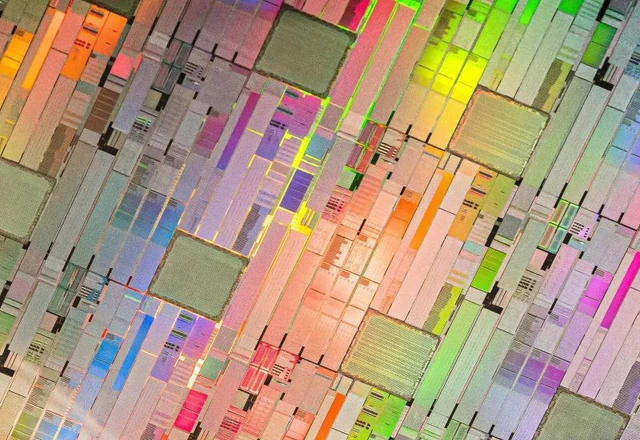 The Triumph of 3nm Chip Manufacturing