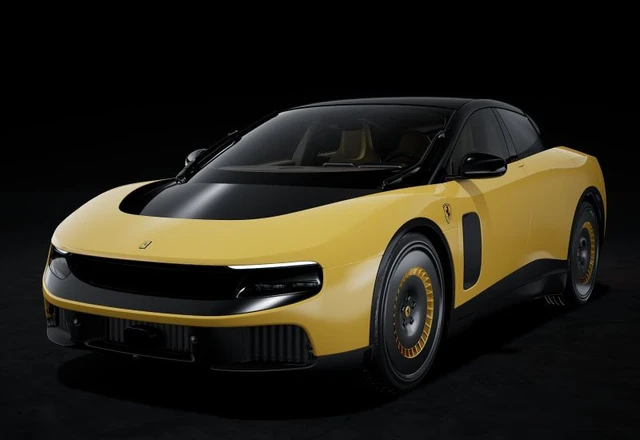
The pivot of luxury marques toward electrification is frequently fraught with skepticism and internal volatility. Ferrari’s inaugural electric venture, the Luce, has weathered a storm of criticism, exacerbated by a series of high-profile leadership shake-ups within the company. Yet, in this industry, the ultimate barometer of success remains the pre-order books. The Chinese market has delivered a surprising verdict, proving that brand heritage continues to outweigh raw technical specifications.
The rollout of the Ferrari Luce unfolded like a classic drama: against the backdrop of the marketing director's resignation, industry circles began buzzing about the "disastrous" debut of the brand's first electric sports car. Critics focused their fire on the model's polarizing design and ambiguous positioning. However, actual market performance proved far more optimistic than the skeptics' forecasts, particularly when viewed through the lens of the Asian market.
Ferrari's pricing strategy for the Luce took a paradoxical turn. For the European market, the vehicle was priced at €550,000 (approximately $626,000). Meanwhile, in China, the sports car was offered at $586,600. At first glance, the gap appears marginal, but for the Chinese market, this is an anomaly. Traditionally, imported vehicles in the PRC are significantly more expensive than in Europe or the UK due to steep import duties and specific taxes tied to internal combustion engine (ICE) displacement.
For comparison, one can look at the Amalfi model, where the price disparity between the British and Chinese markets reaches 50% to the detriment of local buyers. In the case of the Luce, the absence of an ICE allowed Ferrari to bypass several tax burdens, resulting in the electric vehicle being 7% cheaper in China than in Europe.
Despite this price correction, the primary indicator of success was the pace of quota allocation. All 88 units allocated to the Chinese region were completely snapped up via pre-orders. This result is particularly impressive given the fierce competition from local manufacturers.
The Chinese market is currently saturated with high-tech hypercars, such as the YangWang U9 and the GAC Hyptec SSR. These machines are considerably more affordable (ranging from $189,200 to $264,800) and often outperform the Ferrari Luce in key technical metrics, specifically powertrain output and 0-100 km/h acceleration.
Nevertheless, the conservatism of China's high-net-worth individuals plays directly into the Italian brand's hands. For the target Ferrari buyer, prestige, a storied heritage, and brand status carry far more weight than raw specifications. Furthermore, the Luce offers a more utilitarian body style compared to radical hypercars, making it more attractive for daily use within the premium segment.
As for the vehicle's visual identity—which sparked so much debate in the Western press—it was likely tailored from the outset to the aesthetic preferences of the Eastern market. Where European critics saw questionable design choices, potential owners saw exclusivity. Ultimately, the Ferrari Luce demonstrated that in the world of ultra-luxury, emotional brand loyalty and precise positioning can offset any technical advantage held by the competition.
 The Evolution of Solid-State Batteries: From Smartphones to Electric Vehicles