The artificial intelligence boom is fundamentally reshaping the global technology landscape, triggering unforeseen economic distortions. While semiconductor and memory manufacturers report record-breaking profits, the cost of supporting infrastructure is escalating exponentially. A critical disconnect has emerged within the industry: a widening chasm between the skyrocketing cost of resources and the reluctance of developers to pass these expenses on to the end user. Consequently, the expansion of neural networks is evolving into a high-stakes gamble, where scaling is financed through mounting debt and the strategic sacrifice of profitability.
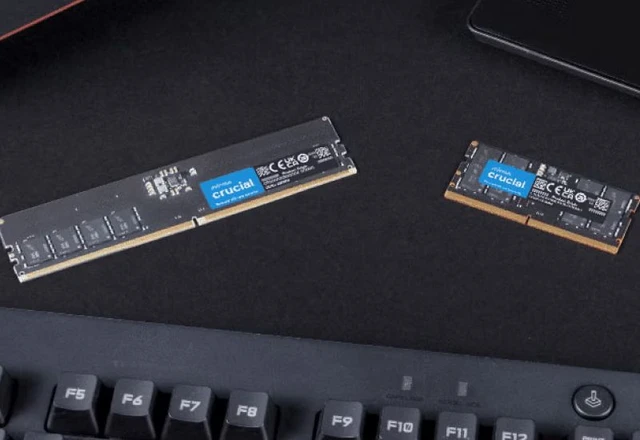
The modern AI market mirrors a "gold rush," where the primary windfall is being reaped by the "shovel sellers"—the providers of specialized hardware. Following Nvidia's meteoric rise, memory giants such as Micron Technology have demonstrated a similar trajectory. Demand for High Bandwidth Memory (HBM), essential for powering massive language models, is so acute that component shortages are projected to persist throughout the coming year.
Yet, beneath the skyrocketing valuations of these suppliers lies a fundamental economic question: who will ultimately foot the bill for this technological extravaganza? In traditional industries, such as commercial aviation, any sharp spike in fuel costs is immediately passed on to the passenger via ticket prices. In the AI sector, this mechanism remains dormant. Leading model developers are deliberately avoiding price hikes for end-users, as their primary objective at this stage is market capture and the aggressive expansion of their user base.
To mitigate mounting overheads, AI service providers are turning to granular optimization tools. This is manifesting as a revision of subscription terms and a shift toward more stringent payment models tied directly to token consumption. Such strategies are forcing corporate clients to recalibrate their budgets, as access to cutting-edge models becomes tangibly more expensive, even when nominal rates appear unchanged.
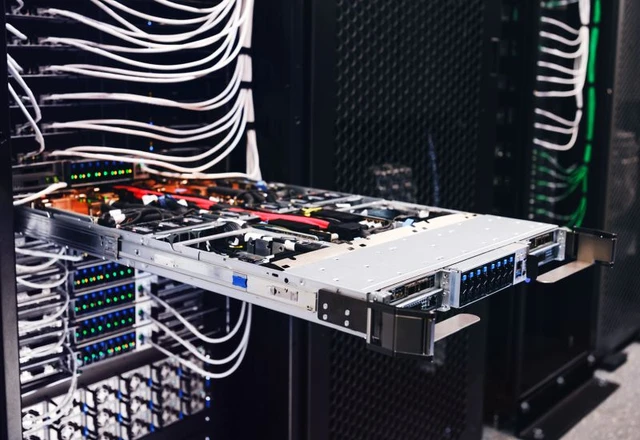
The brunt of the financial strain is currently borne by those building the industry's physical infrastructure—data center operators and venture capitalists. The scale of required investment is so colossal that even a titan like Nvidia has been compelled to leverage debt through bond issuances and bank loans. An even more precarious situation is unfolding for firms like Oracle and SoftBank, whose debt portfolios are swelling rapidly in a desperate bid to keep pace with the industry's evolution.
In the short term, the AI market is betting on a strategy of calculated sacrifice: companies are willing to temporarily erode their margins in exchange for future dominance. This gamble rests on two primary pillars: increasing the efficiency of compute resource utilization (thereby reducing hardware dependency) and the gradual stabilization of chip supplies.
Memory manufacturers, mindful of market volatility and the painful overproduction crises of years past, are proceeding with caution. To balance their risks against client interests, they are introducing new financial instruments—long-term, fixed-price contracts coupled with stringent penalties for failing to procure agreed-upon volumes. In doing so, the industry is attempting to forge a system of reciprocal guarantees amidst a climate of extreme uncertainty.

 The Evolution of the Apple Home Ecosystem