The single-board computer (SBC) industry is steadily evolving, transitioning from an era of simple prototyping toward the development of sophisticated commercial and industrial-grade solutions. In this landscape, the quality of visual interaction has become a critical success factor for any project, whether it be a rugged industrial controller or a high-end home server. The launch of Raspberry Pi’s new 10-inch display marks a pivotal step in expanding user interface capabilities, providing developers with a tool capable of transforming any project into a fully functional, ergonomic interactive terminal.
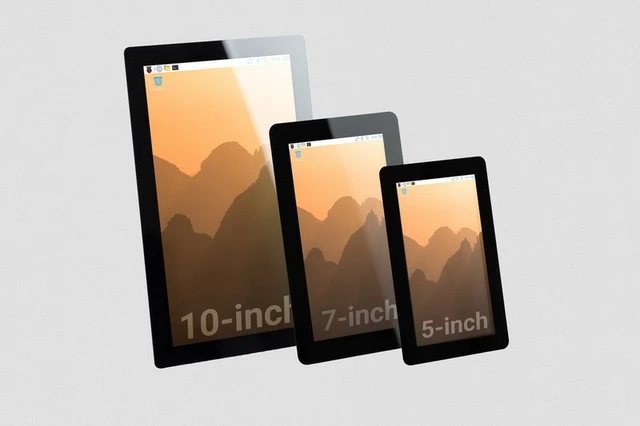
The Raspberry Pi peripheral ecosystem has received a significant upgrade with the introduction of the 10-inch version of the Raspberry Pi Touch Display 2. This addition complements the existing 5- and 7-inch panels, offering substantially more screen real estate for system interaction.
The technical specifications of the new panel represent a quantum leap in data visualization. A resolution of 1200 × 1920 pixels, paired with 85-degree viewing angles, allows the screen to function not merely as a debugging tool, but as a full-fledged frontend for complex systems. Of particular note is the transition to 10-point multi-touch input. While the smaller models in the Touch Display 2 family are limited to five-point sensing, this new version paves the way for more sophisticated gestures and multi-user interaction—capabilities that are critical for modern interfaces.
The utility of such a device extends far beyond hobbyist projects. Thanks to its increased surface area, the panel serves as an ideal foundation for smart home hubs, interactive self-service kiosks, and physical control interfaces in robotics. In laboratory or workshop environments, this display can act as a centralized equipment control node, while in the realm of retro-gaming, it can be transformed into a complete gaming station.
From an integration standpoint, the device is deeply embedded within the Raspberry Pi ecosystem. Power is drawn directly from the main board, eliminating the need for cumbersome external power supplies or additional cabling. The software implementation is entirely seamless: the capacitive touch screen is supported by Raspberry Pi OS drivers "out of the box," ensuring instantaneous deployment when connected to a Raspberry Pi 5 or Compute Module.
However, this technical advancement introduces certain compatibility constraints. The 10-inch display requires higher data throughput, which is achieved through the use of four DSI (Display Serial Interface) lanes. Because previous generation single-board computers—including the Raspberry Pi 1, 2, 3, and 4, as well as the Zero series—support only two DSI lanes, they are physically incapable of driving this panel. For owners of legacy hardware, the 5- and 7-inch screen versions remain available, maintaining backward compatibility.
Priced at $80, the new module is a cost-effective tool for professional hardware builds. Now available through authorized resellers, the product offers the market a balanced synergy of performance, ease of deployment, and visual fidelity.
 Energy Autonomy: The Extreme Edition