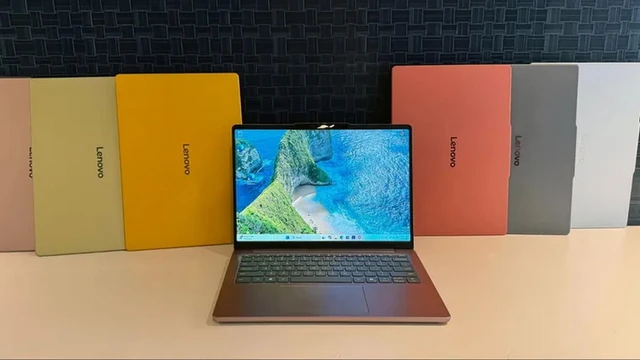
The quest for the perfect equilibrium between performance and portability has long been constrained by the immutable laws of thermodynamics. For decades, the industry has relied on active cooling systems—fans that not only dictated the minimum permissible thickness of devices but also introduced an inevitable acoustic footprint. The emergence of solid-state cooling represents a fundamental paradigm shift in hardware engineering. Lenovo’s AeroBlade concept illustrates how this technology is poised to redefine the boundaries of the modern mobile workspace.
Thermal management in compact devices has long been the primary bottleneck preventing the realization of truly thin yet powerful laptops. Conventional cooling systems, reliant on rotating blades, demand a specific volume of airflow and dedicated space for intake and exhaust, inevitably resulting in bulkier chassis. Project AeroBlade proposes a radical departure from this impasse, replacing traditional fans with an innovative solid-state cooling system.
At the heart of this technological leap is AirJet, developed by Frore Systems. Unlike traditional coolers, AirJet utilizes piezoelectric membranes. These elements vibrate at high frequencies to generate directed airflows within the chassis. With no rotating parts, the device operates in near-silence, mirroring the acoustic comfort of passive systems while maintaining the efficiency of active heat dissipation.
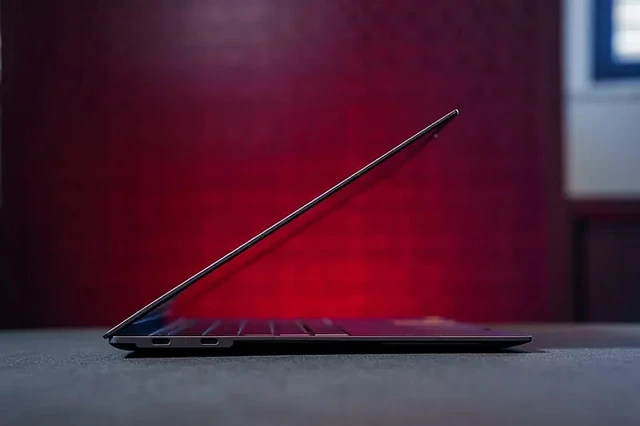
This approach has allowed Lenovo to fundamentally rethink the device's physical footprint. The AeroBlade's thickness does not exceed 10mm, with a total weight of under 830 grams. For context, current ThinkPad X1 Carbon models are noticeably more substantial, measuring approximately 14mm at their thinnest points and weighing around one kilogram. This is not merely a cosmetic reduction in size, but the creation of an entirely new class of ultra-lightweight workstations.
Beyond aesthetics and ergonomics, solid-state cooling addresses one of the most critical issues of electronic longevity: dust accumulation. By eliminating traditional ventilation grilles on the bottom of the chassis, the system becomes a nearly sealed environment. This significantly reduces the amount of dust reaching critical components, potentially extending the device's lifespan and minimizing the need for technical maintenance.
AirJet technology is not an entirely new discovery; it has already undergone initial testing in niche applications. Today, it can be found in select webcams, tablets, compact mini-PCs, and even handheld consoles like the Steam Deck. However, until now, it has remained the province of specialized hardware, failing to penetrate the mass consumer electronics market.
Currently, AeroBlade remains a concept, and it may be some time before production models with these specifications hit the market. Nevertheless, the strategic partnership between Lenovo and Frore Systems sends a clear signal to the industry: the era of cumbersome heatsinks and noisy fans in the business segment is drawing to a close. The industry is moving toward a future where processing power is no longer constrained by the physical volume of the cooling system.
 Nvidia N1X and the New Era of Arm PCs