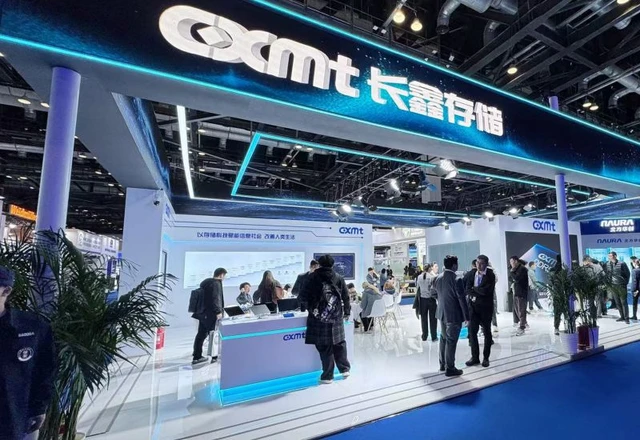
The global semiconductor landscape is undergoing a profound transformation, challenging the long-standing hegemony of industry incumbents. Chinese players are evolving beyond mere technology consumers, pivoting instead toward the development of highly efficient, autonomous production ecosystems. CXMT, in particular, is rapidly ascending as a pivotal force in the DRAM segment, posting extraordinary profitability metrics. This trajectory is driven not only by massive capital injections but by a strategic alignment with the critical market demands of the Big Data era.
For years, the global DRAM landscape has been defined by a rigid oligopoly. However, the emergence of CXMT has shifted the balance of power; the company has already ascended to fourth place in the global rankings, commanding a 9.5% market share by revenue. While it still trails the industry titans in absolute turnover, its efficiency metrics suggest a far more profound structural shift.
Quarterly financial disclosures and data from Quick FactSet reveal that in the second quarter of this year, CXMT outperformed the world's leading players in terms of profit margins. Specifically, the Chinese manufacturer achieved an impressive EBIT (Earnings Before Interest and Taxes) margin of 82%. For comparison, SK hynix posted 76%, while Samsung Electronics—the nominal leader in revenue—stood at 70%. Consequently, despite operating on a smaller scale than Micron Technology or the South Korean giants, CXMT's business model has proven more effective in terms of the cost-to-profit ratio. Even specialized players like Sandisk and Kioxia, who focus primarily on NAND flash, fall behind CXMT in this particular aspect of operational efficiency.
The primary catalyst for this growth has been a strategic pivot toward DDR5 memory. In an era of rapid AI evolution and the expansion of cloud data centers, demand for DDR5 has become critical. The defining characteristic of this segment is high price volatility, which introduces certain risks but opens significant opportunities for agile pricing.
Unlike High Bandwidth Memory (HBM), which is governed by rigid, long-term fixed-price contracts, the DDR5 market allows suppliers to adjust pricing in tandem with market fluctuations. CXMT skillfully leveraged this dynamic, allowing the company to achieve higher profit margins in DDR5 than even in the more technologically advanced HBM segment.
The company's financial trajectory is further validated by its performance in the equity markets. Following its IPO, CXMT became the largest issuer in China, with a market capitalization approximately three times that of Japan's Kioxia. Such a high valuation reflects the market's confidence in the enterprise's long-term potential. The capital raised is being deployed toward an aggressive expansion of production capacity, intended not only to sustain margins but to increase the company's physical footprint across the global semiconductor market.
 AMD’s Strategic Approach to the Budget Segment