The high-performance display market is currently witnessing a seismic shift, defined by a relentless pursuit of every single hertz and nit of brightness. Today’s gamers and creative professionals demand the nearly impossible: true, absolute blacks paired with instantaneous response times. TCL's latest offerings, powered by fourth-generation WOLED technology, seek to reconcile these competing demands within a single panel. By delivering uncompromising speed alongside reference-grade color accuracy, these monitors are charting a new course for the industry’s evolution.
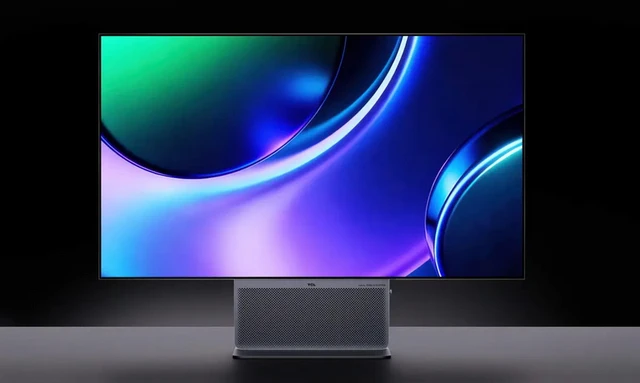
The technological bedrock of the new 32X3B and 27X3B OLED+ models lies in the implementation of fourth-generation WOLED panels. Departing from their predecessors, these displays utilize a quad-layer architecture featuring red, blue, and two additional blue layers. This engineering pivot significantly boosts peak brightness and enhances the overall longevity of the organic LEDs—addressing what has traditionally been the Achilles' heel of OLED technology.
The visual performance is striking: HDR peak brightness reaches 1,500 nits, while full-screen brightness maintains a steady 335 nits. Coupled with 10-bit color depth and 99.5% DCI-P3 coverage, these devices deliver cinematic precision. Furthermore, the VESA DisplayHDR True Black 500 certification confirms the panels' ability to render deep, absolute blacks without any parasitic glow or blooming.
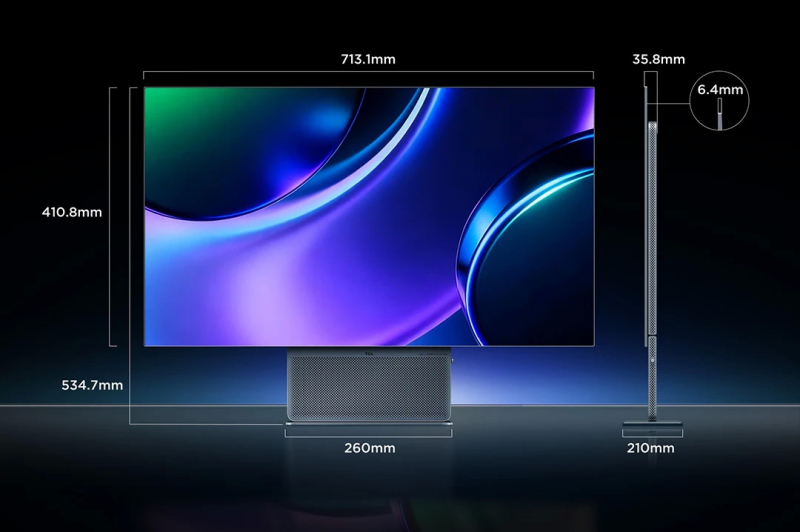
Particular emphasis has been placed on the versatility of the flagship 32-inch 32X3B model. The monitor offers two fundamentally different operating modes: a classic mode featuring 4K resolution (3840 × 2160) at a 240Hz refresh rate for immersive, high-fidelity experiences, and an extreme competitive gaming mode. In the latter, the resolution drops to Full HD (1920 × 1080), allowing the panel to be pushed to a staggering 480Hz, reducing input lag to an absolute minimum.
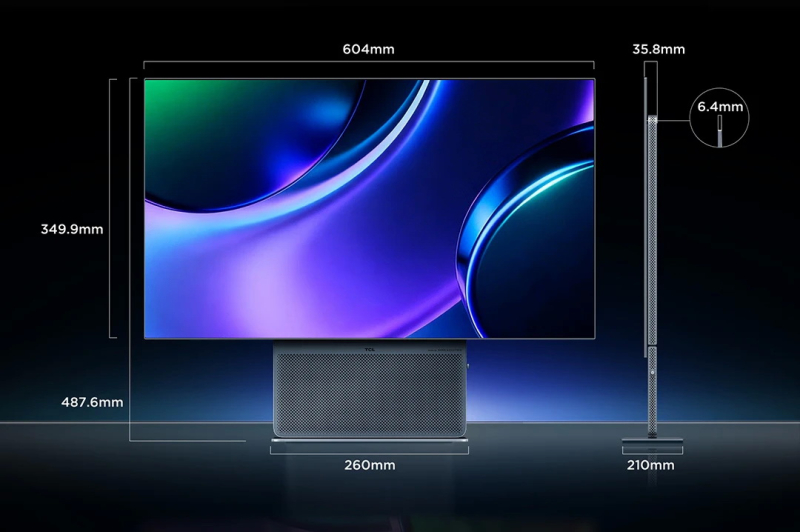
The smaller 27-inch variant is tailored for the 1440p standard with a 280Hz refresh rate. This version implements Black Frame Insertion (BFI) technology which, in synergy with OLED's phenomenal 0.03ms response time, virtually eliminates motion blur during fast-paced on-screen action.
Beyond raw performance, TCL has refined the visual ergonomics. The glossy surfaces of the panels are augmented by a circular polarization layer, reducing the reflection coefficient to a critical low of 1.1%. This effectively solves one of the primary pain points of glossy OLED screens: excessive glare. Additionally, the subpixel layout has been redesigned to eliminate color fringing around text elements, making document editing and coding significantly more comfortable.
The devices' aesthetic is defined by premium materials; a metallic chassis measuring just 6.4mm thick lends the monitors a sleek, minimalist profile. Audio is handled by front-facing speakers tuned in collaboration with Bang & Olufsen, transforming the monitor into a comprehensive multimedia hub.
In terms of connectivity, the 32-inch model boasts a cutting-edge suite of ports, including DisplayPort 2.1 and dual HDMI 2.1 ports. Of particular note is the USB-C port with 90W Power Delivery, allowing the monitor to function as a docking station for laptops by handling video signal transmission and device charging via a single cable.
Currently, these devices are available in the Chinese market, priced at approximately $546 for the 27-inch model and $960 for the 32-inch version. While a global release has yet to be confirmed, the technical specifications of these panels position them as some of the most competitive contenders in the high-speed OLED display segment.
 Virtual Gamepads within the Google TV Ecosystem