The vision of humanoid robotics is rapidly transitioning from the realm of science fiction into the tangible economic sector. However, the industry has collided with a "safety paradox": contemporary machines are either too hazardous for human proximity or so excessively cautious that they lose all operational efficiency. Nvidia intends to resolve this impasse by translating the logic of autonomous driving into the dynamics of physical interaction. This shift evolves robots from isolated tools into genuine collaborators, capable of safe, real-time synergy.
Modern robotics has reached a critical inflection point. For decades, the industry's safety paradigm was defined by separation: robots were either confined to isolated cages or programmed to freeze instantly at the slightest risk of human contact. Today, this binary approach to safety has become the primary bottleneck for productivity. When a machine is forced to decelerate or halt completely with every operator movement, it ceases to be an efficient tool and instead becomes a cumbersome liability.
To break through this barrier, Nvidia is developing a comprehensive solution that elevates human-machine interaction to an entirely new level. At the heart of this strategy is Halos, a software suite built on autopilot principles. Rather than relying on primitive obstacle avoidance, Halos enables robots to analyze their environment dynamically and make decisions in fractions of a second. This transforms the robot from a "blind" executor into a cognitive agent capable of intentional physical interaction.
Nvidia’s tech stack for this purpose is anchored by the IGX Thor platform. This is more than a collection of chips; it is a full-scale operating environment that integrates the robot into the enterprise's broader digital ecosystem. A key innovation here is the ability to connect to external sensors. Consider an autonomous forklift in a warehouse: through integration with surveillance cameras, it can "see" around a corner before it physically arrives. This allows the machine to preemptively adjust its speed or trajectory, eliminating abrupt stops and ensuring a seamless, fluid operational flow.
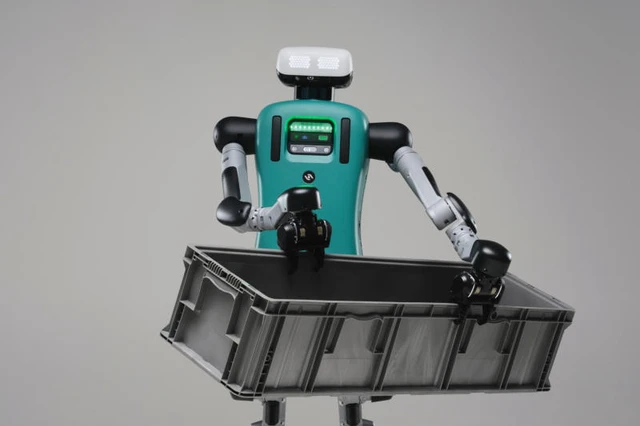
This approach finds direct application in cutting-edge models like Agility Digit. Through the synergy of specialized hardware and software, such machines are beginning to master complex collaborative tasks—such as handing over objects or assisting in moving heavy loads—where physical contact with a human is not only inevitable but essential.
Nvidia's strategy extends far beyond the mere sale of semiconductors. Having already established itself as the global leader in AI infrastructure, the company is effectively architecting the industry standard. The creation of a specialized safety testing laboratory is a strategic masterstroke. By providing robot manufacturers with a venue to validate and refine their systems prior to certification, Nvidia is embedding its solutions into the very bedrock of future products.
It is crucial to recognize that the cognitive load on a robot is orders of magnitude higher than that of a self-driving car. While a vehicle's primary objective is to avoid contact with an object, a robot must understand the semantics of touch. It must distinguish between what can be touched, what must remain stationary, and the precise amount of force required for a specific interaction. This demands a profound understanding of physical dynamics and situational context.
The market potential for this trajectory is colossal. According to Barclays analysts, the humanoid robot segment could reach a valuation of $200 billion by 2035. The path to this figure will be incremental: moving from the automation of warehouse logistics and retail to more complex sectors such as healthcare and construction. Ultimately, the expertise gained in the industrial sector will serve as the foundation for home assistants capable of operating safely and efficiently within the unpredictable environment of a human residence.
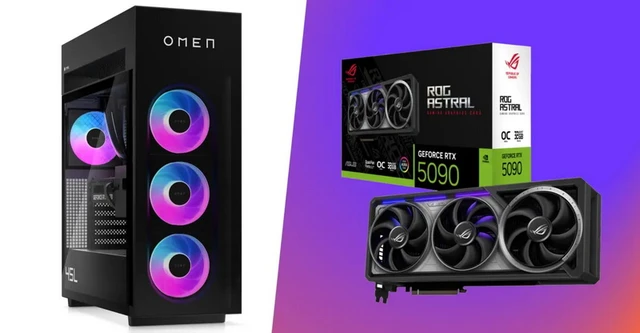 The Economic Paradox of the GeForce RTX 5090