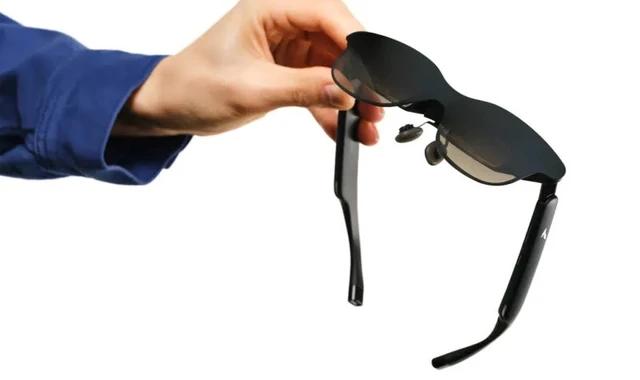
The wearable display industry is evolving, shifting its focus from mere notifications toward a comprehensive, high-fidelity content consumption experience. For today's user, cumbersome physical panels are becoming obsolete; virtual environments now enable the deployment of a screen of any dimension, anywhere in the world. RayNeo is taking a bold leap forward with the introduction of the GT series, a lineup engineered specifically for deep media immersion. These devices aim to transform any environment into a private cinema, delivering uncompromising visual and auditory fidelity.
While previous iterations from the brand, such as the iO Smart series, focused on productivity and multitasking, the RayNeo GT lineup marks a strategic pivot toward pure hedonism. The primary objective of these devices is to deliver a visual and acoustic experience on par with a premium cinema. The series comprises two models: the standard RayNeo GT and the high-end GT Max, where technical specifications are pushed to their absolute limit.
At the core of these devices lies a tandem of specialized processors. Visual processing is handled by the Vision 4000 chip, developed in collaboration with Pixelworks. This silicon manages the most demanding image optimization tasks: from dynamic contrast adjustment and precision white balancing to the real-time, AI-driven conversion of SDR video into HDR.
Operating in parallel is the Zone 360 3DoF module, which enables on-board spatial computing. This allows for three distinct content interaction scenarios. In stabilization mode, the image remains steady even as the user moves—a critical feature for comfortable viewing during transit. Locking mode anchors the screen firmly within a three-dimensional space, while tracking mode allows the display to fluidly follow head movements, creating a natural sense of presence.
The visual architecture is powered by a pair of 0.6-inch Micro LED displays with 1080p resolution per eye. The result is a virtual screen of massive proportions: 231 inches for the standard version and a staggering 307 inches for the GT Max. A high refresh rate of 120Hz ensures fluid motion, while a peak brightness of 1200 nits allows for comfortable use across various lighting conditions. Significant attention has been paid to ocular health: PWM dimming at 3840Hz virtually eliminates flicker, significantly reducing eye strain.
The GT Max gains a distinct technological edge via the Peacock Optical Engine 3.0 Max. This system has allowed the device to be 29% thinner and lighter than traditional Birdbath systems without compromising image quality. To ensure maximum comfort, the glasses support prescription lens inserts, and the GT Max model offers three adjustable interpupillary distance (IPD) settings. This calibration ensures the optical centers align perfectly with the user's pupils, eliminating peripheral artifacts and preventing rapid visual fatigue.
The audio engineering is entrusted to Bang & Olufsen. A four-speaker system creates an immersive soundstage, though a "Whisper Mode" is included for use in public spaces. By utilizing directional audio transmission, sound leakage is reduced by 80%, allowing users to enjoy movies on the go without disturbing those around them.
The ecosystem is rounded out by the RayNeo Pocket TV Pro—a compact streaming box powered by Google TV. Equipped with an Amlogic S905X5M-J chip, 3GB of RAM, and 64GB of internal storage (expandable up to 2TB), this module transforms the glasses into a fully autonomous media center. A 6500 mAh battery provides up to 5.5 hours of runtime, supporting content streaming in Dolby Vision. Notably, the Pocket TV Pro maintains backward compatibility, allowing SDR content to be streamed to the brand's earlier eyewear models.
The market positioning of these devices is aggressively priced: the RayNeo GT is set at $299, while the flagship GT Max is priced at $399. With sales launching on September 4, this high-tech personal cinema is becoming accessible to a broad consumer audience.
 The Price of Acceleration: CXMT’s Rapid Push into Memory