The escalating demands of local AI models and resource-intensive applications are compelling the industry to fundamentally rethink memory architecture in laptops. For years, OEMs have been locked in a persistent trade-off: the flexibility of slower, user-replaceable SO-DIMM modules versus the raw speed of soldered LPDDR. The emergence of the LPCAMM2 standard shatters this dichotomy, seamlessly merging high density with modularity. Rayson’s latest innovations are paving the way for a new generation of truly powerful and versatile mobile workstations.
The mobile computing landscape is confronting a pivotal challenge: the meteoric rise of AI PCs demands massive amounts of RAM with minimal latency. Historically, this was achieved using LPDDR memory, which, due to its electrical characteristics, required direct soldering onto the motherboard. This architectural constraint stripped users of upgradeability and deprived manufacturers of the flexibility needed to assemble diverse configurations.
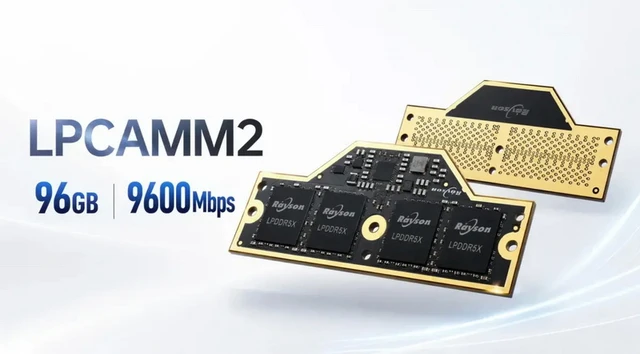
The emergence of LPCAMM2 modules is a paradigm shift. Rayson has introduced a solution based on LPDDR5X with a capacity of 96 GB and an impressive data transfer rate of up to 9600 MT/s. The primary value here lies in the form factor itself: high-speed, energy-efficient memory is now removable and replaceable, while retaining all the inherent advantages of LPDDR.
The technological leap is evident not only in throughput metrics but also in physical architecture. The LPCAMM2 module measures 78 × 23 × 3 mm, allowing for a reduction in motherboard footprint of approximately 60% compared to traditional DDR5 SO-DIMM modules. Such compactness is critical for modern ultrabooks, where every millimeter of space is contested by the cooling system and the battery.
The power profile of this new solution also represents a quantum leap. Rayson claims a reduction in power consumption of roughly 50%, while overall system energy efficiency increases by 70%. In the context of mobile devices, this translates not only to extended battery life but also to reduced thermal output, allowing the processor to maintain peak clock speeds for longer durations under intensive workloads.
It is worth noting that Rayson is not the sole pioneer in the realm of ultra-dense modular memory. Previously, in February, Samsung demonstrated similar specifications—96 GB and 9600 MT/s—within the Lenovo ThinkBook line. However, while Samsung's offering was largely a technological demonstration at the time, Rayson is betting on practical compatibility. The company asserts that its modules have already been validated across platforms from leading global PC manufacturers, bringing them significantly closer to the mass market.
Beyond the flagship 96 GB module, versions with 16, 32, and 64 GB are currently in development, ensuring coverage across the entire device spectrum—from corporate laptops to full-fledged mobile workstations. Although exact release dates and pricing remain undisclosed, the arrival of compatible, replaceable LPDDR5X modules of this caliber signals the end of the era of static, non-upgradable memory configurations in the premium laptop segment.
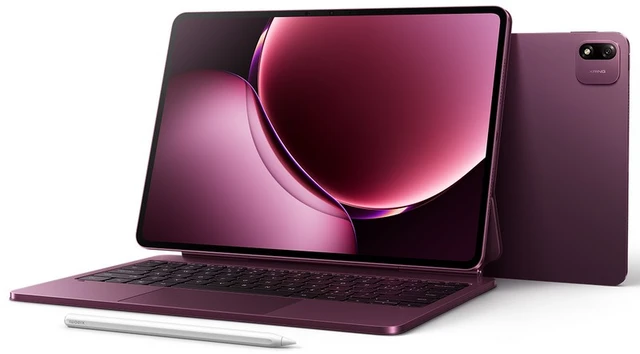 Power and Poise: The Xiaomi Pad 9 Pro Max