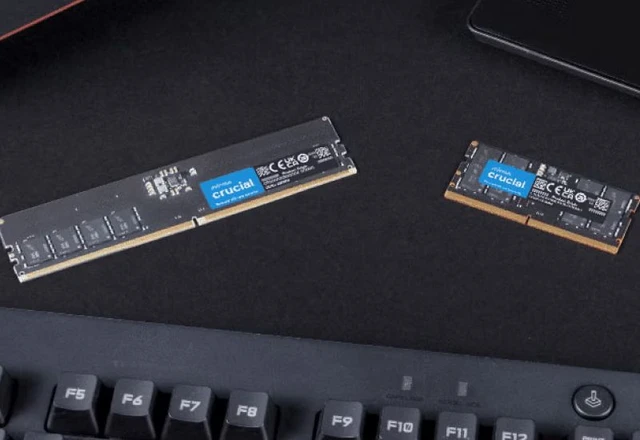
The AI revolution has evolved beyond the realm of algorithms, escalating into a fierce battle for physical infrastructure. The memory market—long governed by predictable cycles of boom and bust—is now entering a period of profound structural transformation. The aggressive absorption of capacity by cloud hyperscalers is creating a vacuum that will be nearly impossible to fill in the short term. Analysts predict that this scarcity will become the new baseline through at least 2028, fundamentally altering the economics of the semiconductor industry.
The semiconductor memory industry is breaking free from the shackles of its traditional cyclicality. Where the market once followed a predictable pattern—swinging from overproduction and price collapses to acute shortages and subsequent rallies—we are now witnessing the emergence of a structural, long-term deficit. Analysts at Jefferies warn that the shortage of DRAM and NAND could persist at least until 2028, suggesting that the "price corrections" long awaited by consumers and electronics manufacturers may simply never materialize.
The projected price dynamics for the coming years are staggering. Contract prices are expected to climb by 40–50% in the current quarter, with a further increase of 30–40% possible by the end of the fourth quarter. This upward trajectory is set to persist into 2027, with forecasted growth of 40–45%. This aggressive surge is driven by a critical misalignment: the pace of new capacity expansion is failing catastrophically to keep up with market appetite.
The primary catalyst for this shift is the rise of the "cloud titans"—the hyperscalers constructing colossal AI clusters. Currently, these giants are absorbing up to 50% of all available memory capacity, a figure projected to climb to 70%. Their procurement strategy has fundamentally shifted; moving away from spot market transactions, these companies are securing long-term contracts spanning two years or more, often paying upfront deposits of up to 40%. In effect, the industry's largest players are reserving future production lines for themselves, creating a structural barrier for everyone else.
In this environment, the consumer electronics segment finds itself in the most precarious position. Unlike cloud providers, manufacturers of smartphones, laptops, and home appliances do not engage in such long-term strategic agreements. Consequently, they are receiving a dwindling supply of chips, which impacts not only the cost of goods sold but the overall volume of production.
The situation is further exacerbated by an internal transformation within the fabrication plants. High Bandwidth Memory (HBM), critical for AI accelerators, offers significantly higher margins than conventional DRAM. This is forcing manufacturers to reconfigure their production lines: the more HBM that rolls off the line, the less capacity remains for standard memory. In this high-stakes race, Samsung Electronics—having encountered headwinds during the HBM3 and HBM3E phases—is betting heavily on the HBM4 generation to close the gap with its competitors.
The "China factor," which many hoped would act as a stabilizing force, remains negligible for now. Local producers, including CXMT, lag significantly behind Korean and Western leaders, with a technological chasm of one and a half to two generations. The lack of access to cutting-edge EUV (Extreme Ultraviolet) lithography equipment makes a transition to DDR6 or HBM3E virtually impossible in the foreseeable future. In the DRAM segment, Chinese firms remain primarily focused on their domestic market, meaning their influence on global market dynamics will be minimal until at least the end of 2027.
A slightly different narrative is unfolding in the NAND segment. Here, Chinese players have a better chance of reaching global parity in terms of technology and supply volumes by 2028. However, even this scenario offers no guarantee of immediate relief.
For DRAM prices to begin their descent, global production volumes would need to increase by 15–20%. Such growth is only possible under one condition: a sudden deceleration in the expansion of AI infrastructure. Otherwise, the world is entering the era of "expensive silicon," where access to memory becomes a strategic asset as critical as energy or rare earth metals.
 The Evolution of the Apple Home Ecosystem