Mosquitoes remain among the world's most lethal disease vectors, driving a global imperative to find alternatives to conventional chemical repellents. In their stead, high-tech systems are emerging, reframing pest control as a challenge of precision targeting. Photon Matrix Lab, a Chinese startup, is proposing a radical solution: an AI-driven, automated laser defense system. However, the trajectory from a viral prototype to a commercial product is fraught with formidable engineering hurdles and stringent safety regulations.
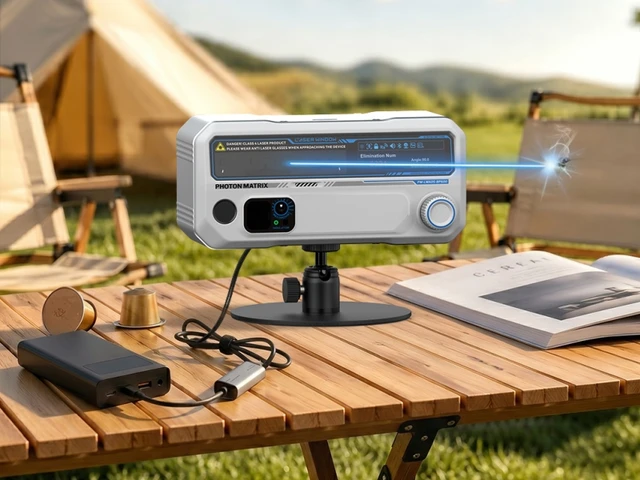
A paradigm shift in pest control has emerged from Changzhou, where the team at Photon Matrix Lab has engineered a system that fuses industrial-grade laser power with the precision of cutting-edge computer vision algorithms. The project ignited a firestorm on the crowdfunding platform Indiegogo: shattering its modest $20,000 goal, the startup ultimately secured $2.7 million. Over 4,000 backers across 50 countries were eager to pay approximately $630 for a technology capable of incinerating pests mid-flight.
At the core of the device lies a sophisticated technological stack. Target acquisition is driven by a combination of LiDAR and millimeter-wave radar, which together generate a dynamic, real-time spatial map. AI-driven analysis filters the data, distinguishing mosquitoes from other airborne objects before an industrial laser delivers a pinpoint strike. This approach underscores a broader market trend: the repurposing of military and industrial innovations for the consumer segment, a transition facilitated by the optimization of global supply chains.
However, the transition from a successful prototype to mass production has exposed a perennial challenge for hardware startups—the chasm between a laboratory specimen and a commercial product. While a single unit allows an engineer to manually calibrate sensors for peak precision, such a process is untenable at scale. Photon Matrix Lab dedicated several months to developing an automated calibration system for its multi-sensor complex, ensuring that every unit in a production run operates with consistent efficiency without human intervention.
Safety remains a paramount concern, as the deployment of open-beam lasers in residential environments carries inherent risks. To mitigate the danger of accidental ocular damage to humans or pets, the system integrates advanced object recognition and a mandatory background verification protocol prior to every discharge. These safeguards are critical for securing European Union certification and registering the product in the U.S. market—the company's primary strategic objectives for the current year.
Despite the initial delays typical of crowdfunding ventures, the startup is poised to begin serial production in August. Initial output is projected at 500 to 800 units per month. In essence, the battle against insects is migrating from the realm of chemical agents and window screens into the domain of high-precision digital weaponry.
 The Phenomenon of the Foldable iPhone Ultra