Global energy volatility and escalating geopolitical tensions are rapidly reshaping the landscape of the global automotive industry. Surging hydrocarbon costs are driving consumers away from traditional internal combustion engines in favor of alternative energy sources. Even conservative industry titans like Toyota are now confronting the inevitability of this transition. Current sales trends reveal a stark contrast: a waning demand for ICE vehicles set against the explosive growth of the electric vehicle segment.
The modern automotive market has reached a critical inflection point, where geopolitical volatility is catalyzing a fundamental technological shift. Escalating tensions between the United States and Iran have triggered fuel price instability across Western markets, resulting in an immediate pivot in consumer behavior. While Tesla aggressively expands its footprint by scaling capacity in Europe, industry titan Toyota is being forced to adapt to a new reality—one where the internal combustion engine (ICE) is no longer the default standard.
Recent statistics point to a systemic decline within the traditional segment. For the fourth consecutive month, Toyota has recorded a drop in demand for its ICE vehicles. In May, the brand's aggregate sales—including the premium Lexus lineup—fell by 7.2% year-on-year, totaling 834,279 units. The most severe impact was felt in the Chinese market, where sales plummeted by a staggering 31.7%. In contrast, figures for North America, Japan, and Europe remained relatively stable, with minimal fluctuations within a 0.3% margin. Nevertheless, the overarching trend in China is alarming: since the start of the year, sales volumes there have dropped by 15%.
As interest in ICE vehicles wanes, there is a phenomenal, near-exponential surge in demand for electric models. In May, Toyota's EV sales skyrocketed by 170%, reaching 37,313 units. Looking at a broader horizon, the company delivered 155,074 electric vehicles in the first five months of the year—a 138% increase over the previous year's performance. Despite these impressive percentages, in absolute terms, electric transport still represents a small fraction of Toyota's total portfolio, not exceeding 7%. This disparity underscores the sheer scale of the manufacturer and the immense potential for further growth.
Toyota's strategy in China warrants a deeper analysis. The company has bet on deep strategic integration with local partners, allowing it to streamline supply chains and radically reduce production costs. This approach culminated in the success of the bZ3X crossover, developed in partnership with GAC. By leveraging affordable local components, the model's starting price was pushed down to approximately $15,000, transforming it into a top-seller for the plant and a powerful tool for mass-market expansion.
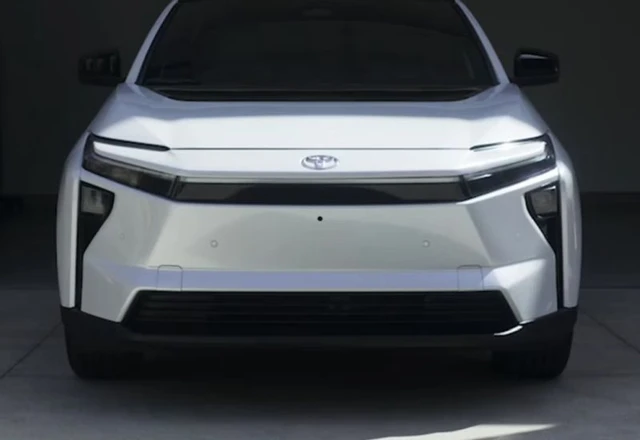
This global expansion extends to other regions as well. The electric bZ4X is already gaining strong traction: in the U.S., it ranked third among the most popular EVs in the first quarter, and in Japan, it topped the respective rankings for the first time in the brand's history. The company's immediate roadmap includes strengthening its North American presence by introducing three-row crossovers: the Highlander BEV and its luxury platform-mate, the Lexus TZ.
Ultimately, we are witnessing a fundamental pivot in the business model of one of the world's largest industrial giants. In Toyota's case, the transition from ICE dominance to electrification is driven less by an intrinsic desire to change course and more by the pressure of external economic factors and shifting consumer priorities dictated by the cost of energy.
 The Evolution of Solid-State Batteries: From Smartphones to Electric Vehicles