In the age of artificial intelligence, the race for supremacy is no longer defined solely by the relentless pursuit of transistor shrinkage. Today, the true competitive edge lies in the ability to integrate disparate computing components into a single, hyper-efficient ecosystem. Intel Foundry is aggressively restructuring its internal operations to secure dominance in the advanced packaging sector. The strategic recruitment of top-tier leadership from the memory industry signals a pivotal shift toward the development of complex heterogeneous systems.
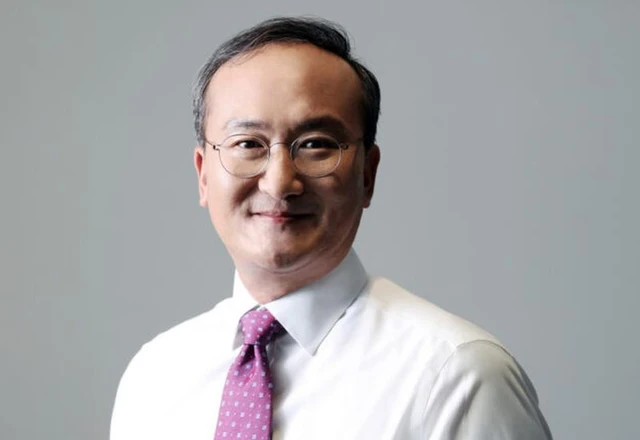
The semiconductor industry is currently undergoing a paradigm shift. As traditional scaling under Moore's Law collides with physical limits, the "More than Moore" concept has moved to the forefront. At the heart of this strategy lies Advanced Packaging—a technology that enables the integration of multiple chiplets with diverse functions into a single package, facilitating colossal data exchange speeds. It is in this domain that Intel Foundry intends to make a quantum leap, appointing Sok Hee Lee as Executive Vice President.
The selection of Sok Hee Lee is neither accidental nor superficial; it is deeply pragmatic. His leadership experience at SK hynix—a company that effectively dictates the terms of the HBM3E high-speed memory market, which is critical for all modern AI accelerators—provides Intel with indispensable expertise. In his new role, Lee will focus not merely on the final stages of production, but on comprehensive system integration and advanced packaging technologies. This will allow the American giant to offer clients bespoke solutions where compute cores and memory modules are integrated at the system level with minimal latency.
The technological focus will shift toward the development of solutions such as EMIB-T and HBI. These technologies enable the creation of complex multi-layered structures where chips are connected via high-density bridges, effectively transforming disparate components into a unified "superchip." Amidst the explosive growth in demand for High-Performance Computing (HPC) and neural networks, the ability to efficiently integrate heterogeneous components has become a primary competitive advantage.
A clear division of labor is emerging within Intel Foundry. While Sok Hee Lee takes charge of the "backend"—packaging and integration—Naga Chandrasekaran continues to oversee the "frontend." His remit includes the most complex and capital-intensive stages: the 18A and 14A lithography processes, which are designed to restore Intel's technological leadership in the production of the smallest transistors. Consequently, the company is decoupling the fabrication of the "die" itself from the process of transforming it into a finished, high-tech product.
This executive reshuffle coincides with the end of an era: Navid Shahriari is leaving the company after a 37-year career at Intel. His departure clears the way for a new management culture oriented toward agility and rapid adaptation to the volatile demands of the AI market.
Sok Hee Lee's return to Intel is more than a mere change of names in a corporate directory; it is a signal to the market that Intel Foundry aspires to become a full-fledged hub for system integration. In a world where system performance is determined not only by processor raw power but by data access speeds, betting on the expertise of memory market leaders appears to be the only viable path to success.
 The Economic Paradox of the GeForce RTX 5090