The global semiconductor landscape is undergoing a tectonic shift, driven by an unprecedented surge in demand for AI-optimized compute power. Intel, which has long struggled to maintain its dominance within this new technological paradigm, is now taking decisive strides toward a fundamental restructuring of its business model. A potential rekindling of its partnership with Apple would serve as a watershed moment, validating the viability of Intel's pivot toward a foundry-centric strategy. This strategic shift, coupled with fresh orders from Google and Nvidia, signals the dawn of a new era of manufacturing diversification across the industry.
The market reaction was instantaneous: Intel shares surged 10% following reports of a potential agreement between the company and Apple. The rally was sparked by comments from Donald Trump regarding Apple's willingness to collaborate with the American giant on the development and production of processors. While Intel has maintained a strategic silence, reports from The Wall Street Journal confirm the existence of preliminary agreements positioning Intel as a chip manufacturer for the iPhone creator.
However, the professional community is urging cautious optimism. Analysts at Bernstein suggest that the partnership will initially be limited in scope, focusing on components that are not critical to the devices' core architecture. For Intel, this represents a "probationary period"—a critical window to demonstrate technological viability and production stability before securing large-scale orders. This is particularly poignant given the historical context: Apple's previous total pivot away from Intel in favor of its own energy-efficient silicon was one of the most damaging blows to the company's reputation.
The Apple deal is not an isolated event but part of a broader strategic offensive. Intel is aggressively expanding its third-party client portfolio; the company is already preparing to ship 3 million Tensor Processing Units (TPUs) for Google, while Nvidia is seriously considering utilizing Intel's capacity for its own accelerators. The technological cornerstone of this push is the launch of pilot production using the cutting-edge 18A-P process node, paving the way for the full-scale serial production of next-generation chips.
This transformation is the result of a comprehensive business restructuring. Initiated under Pat Gelsinger and further evolved under Lip-Bu Tan, the strategy has shifted toward aggressive cost reduction and the conversion of the chip manufacturing division into a fully independent foundry capable of competing for contracts from the world's largest tech corporations.
The catalyst for this pivot has been the generative AI boom and the resulting capacity crunch at TSMC. As the de facto monopolist for the most advanced chips used by Nvidia, Apple, and AMD, TSMC can no longer satisfy skyrocketing demand alone. In an environment where access to fabrication lines has become a strategic asset, Intel is emerging as the only viable alternative capable of offering comparable scale and technological sophistication.
Simultaneously, the very nature of computing is evolving. While GPUs dominate the neural network training phase, the rise of "Agentic AI"—digital assistants capable of autonomously executing complex tasks—is bringing CPUs back into the spotlight. These agents require specialized Neural Processing Units (NPUs) integrated directly into the CPU. This is triggering a new demand cycle in which Intel is poised to reclaim a dominant position.
The synergy of technological renewal, market scarcity, and a paradigm shift in AI has yielded phenomenal financial results. Intel's stock has climbed more than 250% since the start of the year and 500% over the last twelve months, signaling a restoration of investor confidence in the company's ability to shape the future of modern electronics.
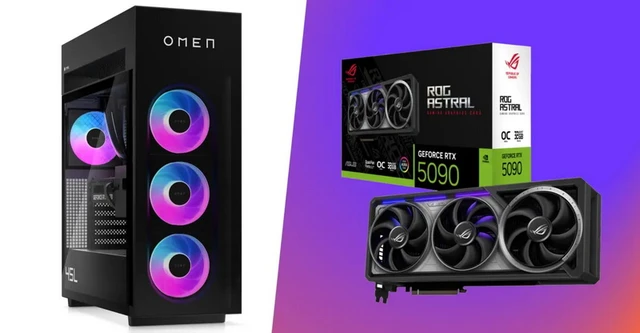 The Economic Paradox of the GeForce RTX 5090