The contemporary data center landscape is undergoing a fundamental pivot toward custom silicon. Cloud hyperscalers are shedding their reliance on off-the-shelf solutions, driven by an obsession with optimizing every single watt of power and every processor clock cycle. Arm is meeting this demand by providing the flexible architectural frameworks necessary to engineer highly specialized systems. The new Neoverse CSS N4 Ranger platform emerges as a pivotal catalyst in this transformation, effectively blurring the line between turnkey products and bespoke silicon development.
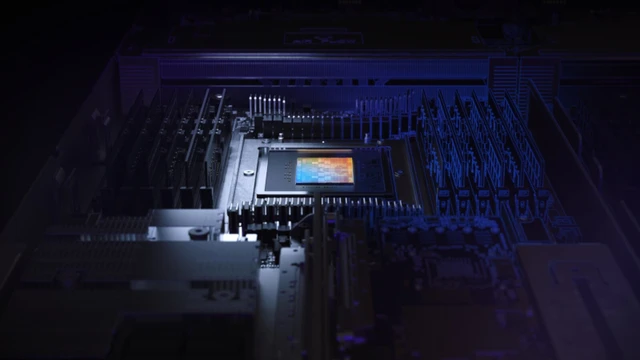
The industry is shifting from the era of general-purpose processors toward an age of specialized compute subsystems. Arm is accelerating this transition with the introduction of the Neoverse CSS N4 Ranger. The Compute Subsystem (CSS) concept enables companies to develop their own server-grade silicon without spending years designing foundational blocks from scratch. Instead, customers are provided with a modular framework, allowing them to flexibly configure core counts, cache volumes, and I/O interfaces to tailor the die to specific business requirements.
The technical architecture of the N4 Ranger is impressive in its scalability. The platform supports configurations ranging from eight to 128 Neoverse N4 cores, with clock speeds reaching up to 3.8 GHz. Furthermore, Arm has engineered the system for even greater scale: by leveraging the UCIe (Universal Chiplet Interconnect Express) interconnect and partner PHYs, it is possible to create multi-chiplet or multi-socket configurations that exceed the 128-core limit. These dies are slated for production on TSMC’s cutting-edge N3P process, ensuring maximum transistor density and superior power efficiency.
Memory and data throughput have become the primary bottlenecks in modern server architectures. The Neoverse CSS N4 addresses this by supporting the latest DDR5 and LPDDR6 standards, offering up to 256 MB of L3 cache per die. At the core level, the architecture provides 64 KB of L1 instruction and data cache, alongside up to 2 MB of L2 cache. To ensure ultra-low latency interaction with peripherals, the platform provides up to 128 PCIe 6.0/7.0 lanes and CXL 4.0 support, rendering it ready for the most demanding workloads of the coming years.
Comparative metrics indicate that the transition from Neoverse N3 to N4 yields a twofold increase in per-socket performance (assuming 128 cores at 3 GHz with 2 MB of cache per core). Moreover, power efficiency has improved by 1.25x, while memory bandwidth has surged by 75%. This validates Arm's strategic trajectory: engineering systems where performance gains outpace power consumption.
It is essential to understand the internal segmentation of Arm's product lines. The "N" series is optimized for maximum performance-per-watt, making it the ideal choice for high-density cloud infrastructures and accelerators. In contrast, the "V" series is engineered for absolute raw performance. It is the V-series cores that power heavy-hitting solutions such as Nvidia Grace, AWS Graviton, and Google Axion. While the N-series finds its niche in specialized adapters (such as the Intel IPU Adapter E2100) or early iterations of Azure Cobalt, the industry is rapidly pivoting toward the V-series for compute-intensive tasks.
The pinnacle of this evolution is the Arm AGI processor, based on Neoverse V3 cores. This solution is already being integrated into the infrastructures of Oracle and ByteDance, and is utilized by Meta, OpenAI, and Cloudflare. The dual-die AGI processor combines up to 136 cores clocked at up to 3.7 GHz, featuring a massive L3 cache of up to 272 MB.
The primary technological advantage of the AGI over traditional offerings from AMD and Intel lies in its tight integration. By placing memory and I/O blocks on the same die as the compute cores, latency is reduced to under 100 ns. Combined with support for up to 6 TB of DDR5-8800 memory and a 3nm process, Arm claims the ability to double the performance per server rack compared to current x86 systems.
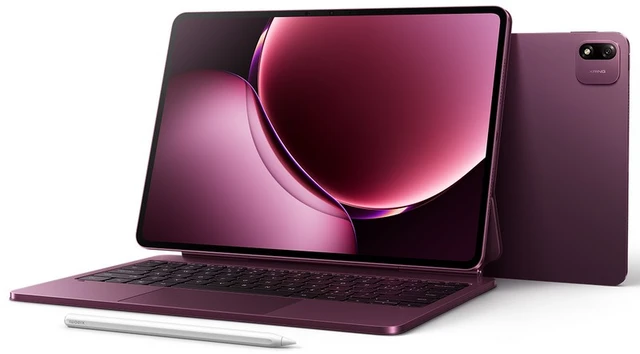 Power and Poise: The Xiaomi Pad 9 Pro Max