The consumer hardware market is reeling from an unprecedented price shock. The meteoric rise of generative AI has transformed gaming GPUs from mere entertainment peripherals into critical strategic assets. Today, the cost of flagship solutions is climbing exponentially, mirroring a global deficit in raw compute capacity. This trend signals a fundamental paradigm shift: gaming is definitively taking a backseat to the corporate demands of neural networks.
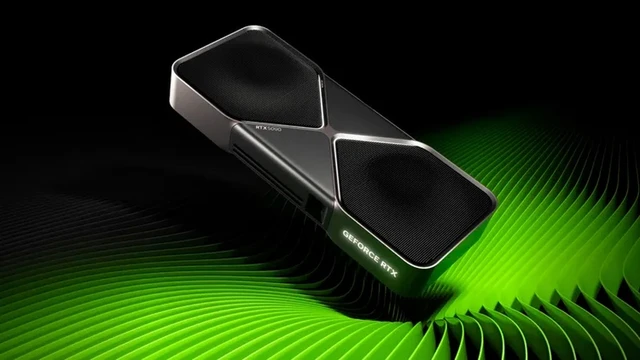
A year ago, the launch of the GeForce RTX 5090 with a suggested retail price of $1,999 appeared to set a new industry benchmark. However, market realities proved far more brutal: fueled by the global AI boom, the flagship's cost has soared to astronomical heights. Today, even the most affordable versions of the card in the US are priced at $5,000—two and a half times the original expectations.
The pricing trends for specific models illustrate the sheer scale of the crisis. For instance, the Zotac Solid OC, currently the cheapest option on the US market, commands $4,999. Even accounting for bundled games and power supplies, the total cost of the package has surged from $2,250 to nearly five thousand dollars over the past year. Premium iterations, such as the Asus ROG GeForce RTX 5090 Astral 4X OC, have hit the $6,000 mark, despite being available for $3,360 just a year ago.
This price surge is not limited to the American market. In Germany, the situation is even more alarming: the MSI Gaming Trio OC is trading at approximately €4,850 (roughly $5,620), nearly double its price from a year ago. Notably, market volatility is so extreme that the price for this specific model has jumped by €800 in the last month alone.
Yet, the impact extends beyond the top-tier segment. The entire Blackwell lineup has undergone a severe price correction, though the degree of impact varies. The most pronounced increase is seen in the GeForce RTX 5060 Ti with 16GB of VRAM, which has climbed 77% above its MSRP. The RTX 5080 has seen a 55% increase, while mid-range solutions like the RTX 5060 and RTX 5070 Ti are now selling for roughly 50% more than at launch.
Even entry-level models, typically the least susceptible to market fluctuations, have not been spared. The GeForce RTX 5050 has risen by 20%, while the less popular 8GB version of the RTX 5060 Ti has seen a 32% price hike. On average, the Blackwell family has experienced a cost increase of approximately 60% compared to official pricing.
The root of this phenomenon lies deep within the supply chain. The issue is not so much a shortage of the GPUs themselves, but rather a deficit of critical components—specifically high-bandwidth memory (HBM) and advanced chip packaging techniques. These resources are being diverted toward the production of massive server systems for neural network training, which yield significantly higher profit margins for manufacturers than consumer gaming.
This crisis has rippled through other hardware categories as well. RAM costs have surged by 500% over the last twelve months, and SSD prices are showing similar exponential growth. Consequently, the modern gaming PC is ceasing to be an accessible family pastime and is rapidly transforming into a luxury item reserved for a narrow circle of enthusiasts.
 The Strategic Alliance of Nvidia and MediaTek