For years, the home gaming landscape was split between budget-friendly consoles and the versatile, yet cumbersome, personal computer. Valve sought to blur this line with the introduction of the Steam Machine—a device engineered to marry desktop-class performance with a console-like form factor. However, the premium price tag sparked a heated debate regarding the product's actual value proposition for the end user. A deep dive into the hardware reveals a stark reality: extreme miniaturization comes at a steep premium.
The debut of the Steam Machine, carrying a $1,049 price tag, caught many off guard. At first glance, the figure seems excessive, particularly when contrasted with the PlayStation 5, which costs nearly half as much. However, this comparison overlooks a fundamental distinction: we are not looking at a closed ecosystem console, but a fully-fledged PC packed into an incredibly compact chassis. Valve claims to be selling the device at near-cost, a thesis that holds up once you attempt to assemble a comparable system independently.
The core engineering feat of the Steam Machine lies in its dimensions. Within a silent, cubic enclosure measuring just 15 centimeters per side, Valve has managed to integrate 16 GB of RAM and a 6-core AMD mobile processor based on the Zen 4 architecture. The graphics subsystem is powered by a bespoke AMD chip based on RDNA 3 with 8 GB of VRAM, while storage options range from 512 GB to 2 TB SSDs. While building a more powerful computer is trivial, achieving equivalent performance within such a constrained volume using off-the-shelf mobile components is nearly impossible.
To stress-test the device's value proposition, an experiment was conducted to build the closest possible hardware analog. Since identical mobile chips are unavailable on the consumer market, a mini-ITX platform was used as the foundation. The Fractal Design Terra was chosen as the chassis—one of the most compact representatives of its class with a volume of approximately 10 liters, allowing for the installation of a full-sized desktop graphics card.
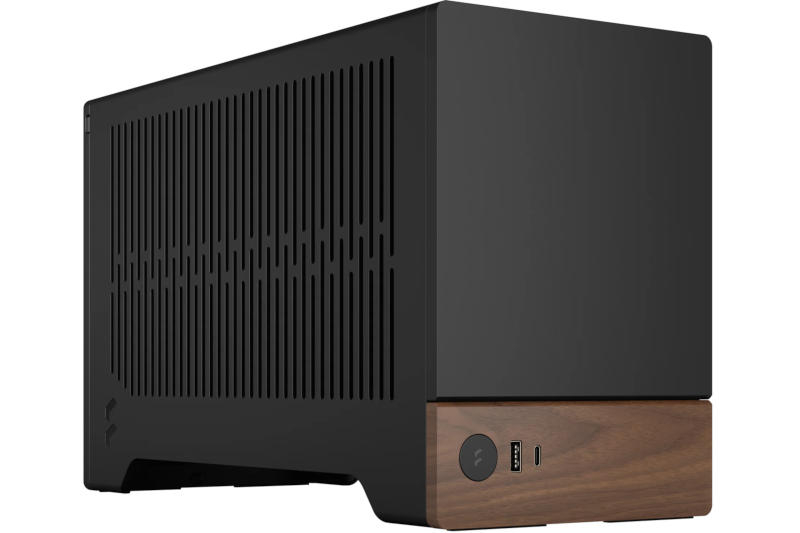
The manifest for this "alternative" Steam Machine included an AMD Ryzen 5 8400F processor, an ASRock Challenger Radeon RX 7600 with 8 GB of GDDR6, and an ASUS ROG Strix B650E-I motherboard. To ensure stability within the limited thermal envelope, a Thermalright AXP90 X47 low-profile cooler and a compact Corsair SF750 power supply were selected. The final cost of this build ranged from $1,268 to $1,446, depending on the SSD capacity.
This result highlights a striking paradox: attempting to independently assemble a system that matches the power and compactness of Valve's solution proves more expensive than purchasing the Steam Machine itself. Despite utilizing desktop components—which are typically more affordable than specialized mobile silicon—the premium cost of a high-quality SFF (Small Form Factor) chassis and specialized motherboards completely negates any potential savings.
Other pre-built mini-PCs exist on the market, but they come with their own set of trade-offs. For instance, the Minisforum AtomMan G1 Pro, featuring a Ryzen 9 8945HX and an RTX 5060, retails for around $1,400—surpassing Valve's pricing—while operating with a significantly higher acoustic profile. The modular Framework Desktop offers a more potent Ryzen AI Max 385 processor but falls short in graphical performance due to its integrated Radeon 8050S solution, all while maintaining a more cumbersome footprint.
Ultimately, it becomes evident that replicating modern console-grade performance in an ultra-compact form factor is a daunting and costly endeavor. Faced with memory shortages that limited Steam Machine production volumes, Valve made a strategic pivot. The company opened access to SteamOS 3.8, allowing its optimized operating system to run on any PC equipped with AMD Radeon graphics. Consequently, even those unable to secure Valve's proprietary hardware now have the means to transform their own computers into the quintessential gaming console experience.
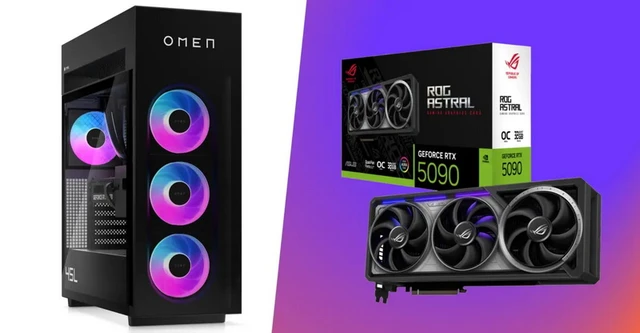 The Economic Paradox of the GeForce RTX 5090