The global race for AI supremacy has fundamentally shifted; it is no longer a battle of algorithms, but a war of physical infrastructure. The construction of colossal data centers demands astronomical capital expenditures, pushing tech titans toward sophisticated financial engineering to mask their mounting debt loads. However, capital markets are beginning to price in these escalating risks, driving up borrowing costs even for the industry's most dominant players. This trend signals the dawn of an era where unfettered access to cheap capital is no longer a guaranteed catalyst for AI expansion.
The current epoch of artificial intelligence is defined by extreme capital intensity. Powering next-generation models no longer requires mere server farms, but entire industrial clusters with power demands measured in gigawatts. In this relentless pursuit of compute capacity, titans like Meta Platforms are forced to engineer infrastructure scaling strategies that avoid bloating their primary financial statements or alarming shareholders with a sudden spike in balance sheet debt.
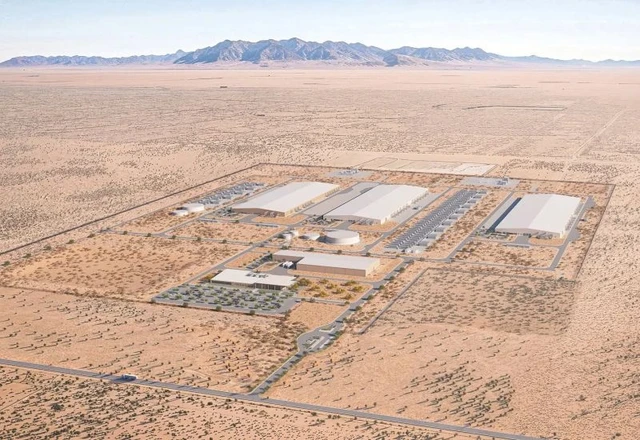
One such mechanism is the deployment of Special Purpose Vehicles (SPVs), which allow companies to shift liabilities off-balance sheet. A prime example is the construction of a data center in El Paso, Texas. To execute this project, Meta is leveraging BlackRock structures acting as bond issuers. Under this arrangement, Sopaipilla nominally holds 80% ownership of the new facility, while Meta retains only 20%. This architecture allows the company to aggregate the necessary capital while formally maintaining a "clean" corporate balance sheet.
However, financial markets are growing increasingly cautious. The cost of capital for the El Paso project—estimated at $12 billion with a projected capacity of nearly 1 GW—has risen noticeably. Bond yields have climbed above 7%, representing a 40-basis-point increase over a similar deal last year when Meta raised $27 billion. At this scale, even a marginal fluctuation in rates translates into additional annual expenses totaling tens of millions of dollars.
This rise in borrowing costs reflects deep-seated creditor anxiety. Investors are beginning to question the predictability of ROI timelines for AI infrastructure and are weighing default risks more heavily. The market no longer accepts promises of "revolutionary productivity gains" as an unconditional guarantee of repayment; instead, it is demanding a higher risk premium.
The structure of the Texas deal further demonstrates Meta's attempt to aggressively hedge its exposure. Sopaipilla’s bonds, maturing in 2028, are secured by lease payments from Meta stretched over 20 years. Furthermore, Meta has reserved the right to exit the project without compensation if construction is delayed by more than 18 months and has capped potential budget overruns at 5% of the original estimate.
Such practices of "diluting" financial responsibility are becoming systemic across the industry. For instance, the startup Anthropic recently raised $35 billion by using GPUs themselves—and guarantees from Broadcom—as collateral. This signals the emergence of a new financial paradigm where hardware serves as legitimate credit security.
Despite the rising cost of capital, the investment appeal of these instruments remains high. S&P Global Ratings assigned Sopaipilla an A+ rating, just one notch below Meta’s own AA- rating. This confirms that even amidst growing market skepticism and rising rates, tech giants still command immense credit trust—though the era of "free money" for building AI empires has definitively come to an end.
 The Triumph of 3nm Chip Manufacturing