In the arena of competitive gaming, the battle for every millisecond has long since evolved from a test of raw reflexes into a pursuit of technological dominance. For years, the industry viewed the jump from 144Hz to 240Hz as the threshold of practicality—the point beyond which the law of diminishing returns took hold. Yet, emerging data from LG Display suggests that crossing the 480Hz threshold offers more than just superficial visual fluidity; it delivers a measurable increase in input precision. This research prompts a fundamental question: to what extent can hardware push the boundaries of human performance in real time?
Modern first-person shooters (FPS) demand a seamless synergy between visual perception and motor response. Historically, two primary bottlenecks have hindered this synchronization: input lag and motion blur. When a display's refresh rate is insufficient, the brain perceives a "stuttering" image, forcing the player to intuitively predict a target's trajectory rather than reacting to it in real time.
To validate the impact of ultra-high refresh rates, LG Display conducted an experiment involving 31 gamers. Notably, the sample consisted of average users rather than professional esports athletes, allowing the results to be extrapolated to a broader audience. In a blind study, participants played FPS titles at 60, 240, 360, and 480 Hz, with the modes rotated randomly to eliminate habituation or psychological expectation.
The findings were telling. The primary metric used was the "Hit Score" (shooting accuracy). Moving from a baseline of 60 Hz to 480 Hz resulted in a staggering 38% increase in accuracy. However, from an industry perspective, the most intriguing data point was the delta between already high-performance tiers: the jump from 240 Hz to 480 Hz yielded an additional 10% gain in efficiency. This proves that even for a trained eye with fast reflexes, increasing the refresh rate continues to provide a tangible advantage.
The technical underpinning of this phenomenon lies in the radical reduction of latency. At 480 Hz, input lag was more than 10 milliseconds lower than at 60 Hz. In the context of a high-intensity firefight, this difference allows for more precise determination of an opponent's current coordinates, minimizing crosshair misalignment. Subjective feedback from participants mirrored these data points, with the maximum refresh rate receiving the highest scores for motion fluidity and ease of target tracking.
Nevertheless, these conclusions should be viewed with a degree of critical scrutiny. The study, presented at Display Week 2026, was not independent—it was conducted by the panel manufacturer itself. A limited sample size of 31 individuals is insufficient to establish a global statistical certainty, and the lack of data across other gaming genres leaves the universality of this advantage an open question.
Despite these caveats, the industry's trajectory is clear. LG Display is integrating these insights into its roadmap for gaming OLED panels via Dynamic Frequency & Resolution (DFR) technology. The essence of this approach is the flexible management of display resources: the system can automatically downscale resolution to reallocate bandwidth, enabling extreme refresh rates.
This trend is already manifesting in commercial offerings. For instance, Asus has introduced a line of dual-mode monitors capable of switching from 4K to Full HD to push refresh rates up to 480 Hz. Consequently, the industry is arriving at a pragmatic compromise: in scenes where aesthetics and detail are paramount, the user enjoys ultra-high resolution; in moments of peak competitive tension, they switch to maximum speed—which, as the data suggests, translates directly into a competitive edge.

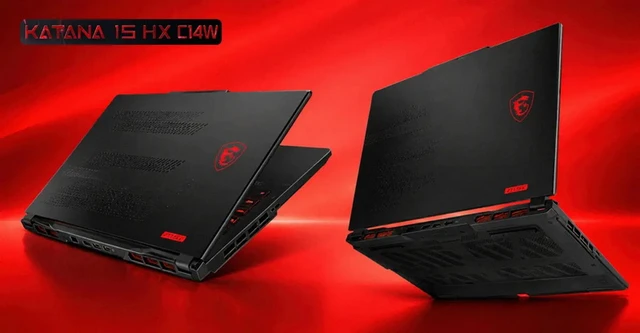 MSI Katana 15 HX and the Memory Paradox