In the semiconductor industry, technical prowess is secondary to absolute discretion. For Apple—a company whose corporate identity is forged in a cult of secrecy—selecting a manufacturing partner is not merely a business decision; it is a matter of strategic survival. While TSMC meticulously cultivated a reputation as the flawless, silent executor, Intel repeatedly betrayed a fundamental misunderstanding of the delicate dynamics governing such a partnership. Their history serves as a stark lesson in how a single tactical misstep in communication can instantly nullify years of engineering breakthroughs.
Apple's transition to its own Apple Silicon family in 2020 represented one of the most significant tectonic shifts in modern electronics. This move did not merely signal the end of a long-standing partnership with Intel; it redistributed market influence, elevating Taiwan's TSMC to the status of the primary beneficiary of Cupertino's drive for technological sovereignty. Yet, the roots of this divorce run far deeper than a mere pursuit of power efficiency or raw performance.
The conflict of interest became a systemic issue as early as the dawn of the iPhone era. At the time, Apple attempted to recruit Intel for mobile processor development, but Intel declined, forcing Apple to turn to Samsung. This alliance was doomed from the start: Samsung was a direct competitor in the smartphone market, and as Android expanded, the rivalry became overt. This experience forged Apple's rigid requirement for future partners: absolute neutrality and the absence of proprietary products that compete with the client.
Against this backdrop, TSMC offered the ideal model. As a pure-play foundry, the Taiwanese giant produced no chips of its own, guaranteeing the security of its clients' intellectual property. The decisive pivot occurred in late 2010 during tripartite negotiations involving the leadership of Apple, Foxconn, and TSMC. Although Intel was considered a viable alternative, Tim Cook ultimately bet on TSMC, realizing that the Taiwanese firm was not only technologically competitive but possessed something Intel catastrophically lacked: a culture of absolute silence.
Years later, Intel attempted to re-enter the fray, initiating a massive internal restructuring under the leadership of Lip-Bu Tan. The company found itself trapped in a classic "vicious circle" of capital expenditure: Intel was reluctant to expand capacity without guaranteed orders, while industry titans like Google, Tesla, and Nvidia could not commit their production without seeing tangible capacity. Under intense pressure from the White House to localize advanced chip manufacturing within the U.S., Intel attempted to mend its relationship with Apple.
However, it was at this critical juncture that the company made a fatal error. In an effort to convince Apple of its ability to rapidly scale production, Intel entered negotiations with equipment suppliers. To secure priority deliveries and accelerate the process, Intel's management explicitly informed suppliers that Apple was already a client. In doing so, the company used Apple's name as leverage, effectively leaking confidential information about potential collaboration to third parties.
For Apple, where secrecy is elevated to the status of a religion, this act confirmed their worst fears. In trying to prove its reliability, Intel demonstrated a complete lack of professional competence regarding confidentiality. While TSMC CEO C.C. Wei emphasizes that client trust is the company's highest value, Intel showed it was willing to sacrifice a partner's privacy for operational gain.
Today, the geopolitical climate and the U.S. drive for technological independence may force Apple to collaborate with Intel once again. However, such an alliance would be born of necessity rather than trust. TSMC remains the primary and indispensable partner, while Intel faces a long and arduous journey to rebuild a reputation it dismantled with a single careless phrase.
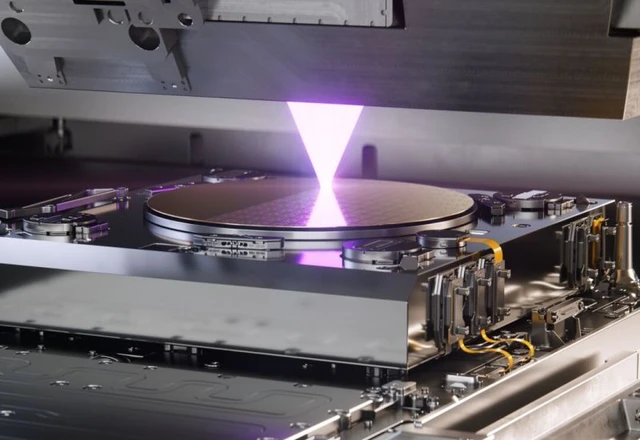 The Horizon of China's Technological Sovereignty in Lithography