The global semiconductor market is undergoing a fundamental transformation, driven by the explosive ascent of generative AI. At the epicenter of this shift stands ASML—the sole provider of the critical infrastructure without which the modern digital world simply could not exist. To safeguard its technological leadership and retain mission-critical expertise, the company is implementing an aggressive incentive system for its workforce. This move reflects a broader industry trend: the strategic redistribution of windfall profits toward human capital.
Amidst the breakneck pace of AI infrastructure expansion, ASML has announced a one-time incentive for its global workforce. Every team member will receive a stock package valued at €20,000. Far from being a mere gesture of goodwill, this is a calculated strategic move designed for talent retention: ownership rights to these shares will not fully vest until early 2030. In essence, the company is implementing "golden handcuffs," incentivizing specialists to remain on board for the next several years.
The scale of the program is staggering, encompassing ASML's entire global headcount of 45,000 employees. Such a strategy has become the gold standard for semiconductor industry leaders, where the war for talent is as fierce as the battle for market share. Similar incentive mechanisms have already been deployed by Samsung Electronics and SK hynix, while TSMC has significantly boosted its profit-sharing payouts. It is clear that companies capitalizing on the AI boom recognize a fundamental truth: technological superiority is driven primarily by individuals possessing unique, specialized expertise.
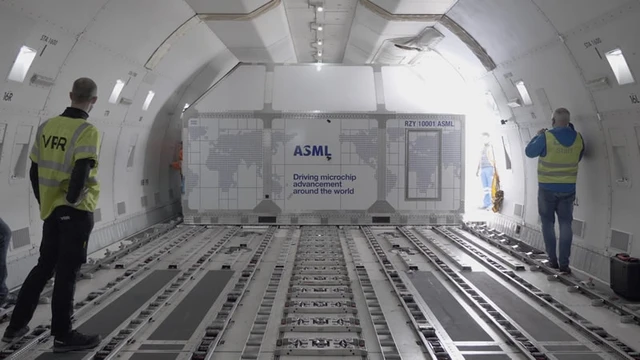
It is worth noting that ASML occupies a singular position in the global economy, acting as a de facto monopoly in the production of advanced lithography systems. Specifically, this refers to Extreme Ultraviolet (EUV) equipment, which enables the printing of transistors at the nanometer scale. Without these machines, the production of Apple's latest processors, Nvidia's GPUs, and specialized data center chips would be physically impossible.
Current market dynamics are so favorable that ASML has already revised its sales forecasts upward twice within a single year. Simultaneously, the company is aggressively expanding its production capacity to keep pace with surging demand. In this context, investing in human capital is a logical extension of its expansion: when product demand outstrips manufacturing capabilities, the primary bottleneck is not just the number of machines, but the caliber of engineers capable of designing and maintaining them.
 Nvidia N1X and the New Era of Arm PCs