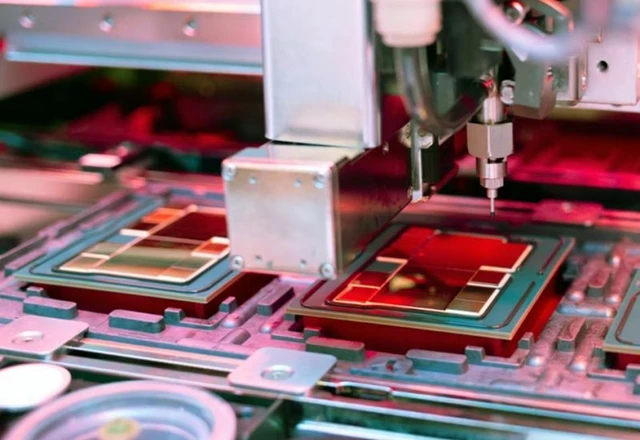
In the current geopolitical landscape, control over semiconductor manufacturing has evolved into the modern equivalent of securing a strategic resource. Taiwan, which commands nearly 90% of the advanced semiconductor market, has emerged as the primary epicenter in the global battle for human capital. To circumvent legal hurdles, sophisticated tactics of mimicry are being deployed, with Western brands often serving as a facade to poach top-tier engineers. This clandestine war for talent exposes a profound tension between the pursuit of technological sovereignty and the stark realities of industrial espionage.
The global semiconductor market has evolved into one of the most cutthroat arenas of competition, where the primary asset is no longer hardware, but the unique expertise of specialists. Taiwan occupies a dominant position in this hierarchy: the island accounts for approximately 60% of total global chip production, and in the cutting-edge segment, this share reaches a critical 90%. Such a concentration of expertise makes the island a prime target for those seeking to accelerate their own technological breakthroughs.
However, for certain entities, the legal recruitment of specialists and the registration of businesses in Taiwan are fraught with significant legal hurdles. In response, the practice of establishing "shell companies" has emerged. The scenario typically follows a specific pattern: an engineer is offered a position at a representative office of a Western firm, accompanied by a compensation package that exceeds market averages by two, five, or even ten times.
A poignant example is the case of Blue Ocean Smart System. In 2020, a specialist from Hsinchu was offered an annual income of $120,000, with the company positioning itself as an American developer. It was only later that the employee discovered his intellectual output was effectively being funneled to colleagues in Nanjing, and the organization itself was merely a facade for Chinese owners. Such schemes have become systemic; over the last six years, Taiwanese law enforcement has investigated 166 cases involving companies operating under the cover of local structures.
Obfuscation tactics are constantly evolving. When simple front companies cease to be effective, more sophisticated schemes involving nominee owners from third countries are employed. For instance, Gongjin Electronics utilized the citizenship of a Japanese resident for formal business registration, while the actual funding originated from the PRC. Other players, such as the contract manufacturer SMIC, utilized offshore structures registered in Samoa to discreetly recruit high-value talent.
This aggressive talent hunt was driven not only by domestic aspirations but also by external pressures. The imposition of US sanctions against Huawei in 2019, coupled with a broader drive toward technological sovereignty, triggered an exponential surge in the PRC's domestic chip design market: from 2015 to 2025, the number of specialized companies grew from 736 to nearly 4,000.
However, such expansion comes at a steep cost. Taiwanese law views these methods as industrial espionage, carrying severe penalties: up to 12 years of imprisonment and fines reaching $3.1 million. Even giants like Xiaomi and OnePlus have come under the microscope. In the case of Xiaomi, the organization of processor development in Taiwan involving dozens of local engineers led to legal prosecution and the conviction of the organizers in 2024. Similarly, a research center funded by OnePlus, which hired over 70 specialists, became a focal point for regulators.
Despite the scale of these operations, a strategic pivot has been observed recently. As the domestic chip design market in the PRC becomes more self-sufficient, the acute necessity for "brain imports" from Taiwan is gradually diminishing. Law enforcement statistics confirm a slowdown in poaching activities; however, the precedent set demonstrates how vulnerable intellectual property can be when faced with massive financial pressure and sophisticated corporate subterfuge.
 The Horizon of China's Technological Sovereignty in Lithography