The foldable device market has evolved from a mere experimental playground into a battlefield of intense technological rivalry. Samsung, the long-standing hegemon of the sector, now faces a formidable challenger in Apple and its iPhone Duo, sparking a renewed engineering arms race. The conflict has shifted beyond mere marketing narratives, descending into the realm of microscopic tolerances and advanced materials science. At the heart of this struggle is the drive to transcend the physical constraints of the form factor, transforming foldable devices from niche curiosities into truly mass-market products.
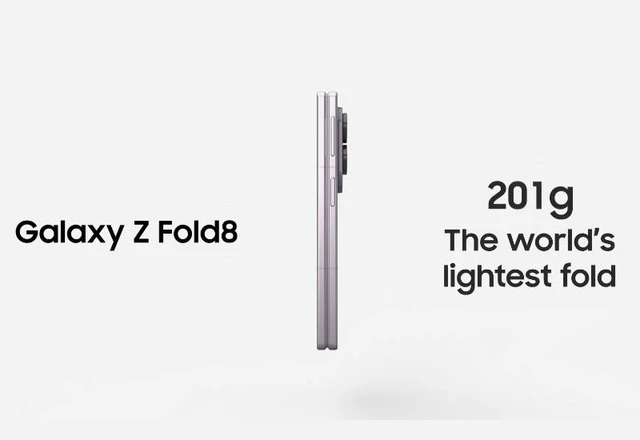
The debut of the iPhone Duo served as a catalyst, forcing the South Korean giant into an aggressive defensive posture to protect its market dominance. Analysts at Counterpoint Research confirm that while Samsung currently maintains its lead, Apple's expansion poses a tangible threat to the company's market share. Samsung's response was immediate and multifaceted, ranging from massive advertising blitzes across South Korea, the UK, and Japan to pointed jabs on social media. Slogans touting the "world's lightest foldable" and ironic hints that Apple is merely retracing Samsung's footsteps underscore a profound gap in expertise: while its competitor is taking its first tentative steps, Samsung has already iterated through eight generations of foldable devices.
The irony of the situation lies in the fact that Apple, upon entering this segment, is building upon a foundation laid by its primary rival. Samsung Display, the corporate division of the Korean conglomerate, supplies the flexible panels even for the iPhone Duo, effectively making Samsung the technological beneficiary of any success Apple achieves in this arena.
However, the real conflict is being fought within the chassis. For a long time, excessive weight and thickness remained the primary barriers to mass consumer adoption. Samsung's engineers set an ambitious goal: to make a foldable flagship lighter than a traditional smartphone. Through the evolution from the Galaxy Z Fold 5 to the Galaxy Z Fold 8, the device's weight plummeted from 253 to 201 grams. For comparison, the classic Galaxy S25 Ultra weighs 218 grams, making the new Fold not just competitive, but actually lighter than its "traditional" sibling. Simultaneously, the chassis thickness has been nearly halved—dropping from 17.1 mm in the first generation to 8.9 mm in the current model.
Achieving these metrics required a fundamental overhaul of material science. A key innovation was the introduction of a titanium alloy plate, with a thickness three times thinner than a human hair. This component provides the necessary screen rigidity without increasing the overall footprint. Manufacturing such elements proved to be a significant industry challenge: standard equipment is incapable of processing metal thinner than 0.15 mm without risking deformation, necessitating a complete modernization of the production processes.
Equally daunting was the engineering of the hinge mechanism. It must be simultaneously ultra-lightweight and exceptionally wear-resistant, while evenly distributing mechanical stress during every opening and closing cycle to prevent damage to the chassis and the display matrix.
In the pursuit of efficiency, Samsung reimagined the device's entire internal architecture. Chassis components are now crafted from aluminum, which balances low weight with excellent thermal conductivity. To combat overheating, the cooling system—based on a graphite heat sink—was optimized, with its volume increasing by 7% over the previous generation.
Weight optimization was executed with surgical precision: engineers analyzed the composition and design of 270 individual components and over 180 types of auxiliary materials. The battle was fought over fractions of a gram. PCB layouts, antenna array configurations, and the design of flex cables and connectors were all re-engineered from the ground up. This "micro-optimization" approach yielded a tangible result across the entire device.
Yet, technological advancement often necessitates trade-offs. In the Galaxy Z Fold 8 Ultra, priority was given to endurance: battery capacity increased from 4,400 to 5,000 mAh. Although this added 6 grams to the total weight, the overarching strategy of reducing mass in other modules allowed the device to remain within its target metrics, offering the user a more powerful yet ergonomically refined product.
 A Comprehensive Refresh of Apple's Global Product Portfolio